A forgotten heirloom variety and one gardener’s five-year quest to recreate a family treasure.
For two decades, my family chased the perfect strawberry. We were on a quest to breathe life back into Grandma Charlotte’s legendary strawberry freezer jam. Every attempt with modern varieties had fallen short—wrong flavor, wrong texture, wrong everything.
Then came the great stillness of COVID-19. From that quiet came my vision of a backyard strawberry garden dedicated solely to my quest. From that day forward, I had one mission: recreate Grandma Charlotte’s treasure.
My sister-in-law had used Hood strawberries (Fragaria × ananassa ‘Hood’). However, I believed my methods learned through Master Gardener training would bring forth the perfect berry. How beautifully wrong I was.
That year I grew Hoods in a raised bed, using premium organic soil and fertilizer. By the end of July, I had harvested and frozen enough berries to make two batches of jam.
To better my odds, I used organic cane sugar in the recipe and instead of margarine tubs I used proper canning jars. After months of anticipation, the response to my jam was deflating. The sweetness wasn’t right. The texture missed its mark. The color fell flat.
Year 2 brought another “Nope, that’s not it.” Two years of failed jams nearly defeated me and then came the breakthrough.
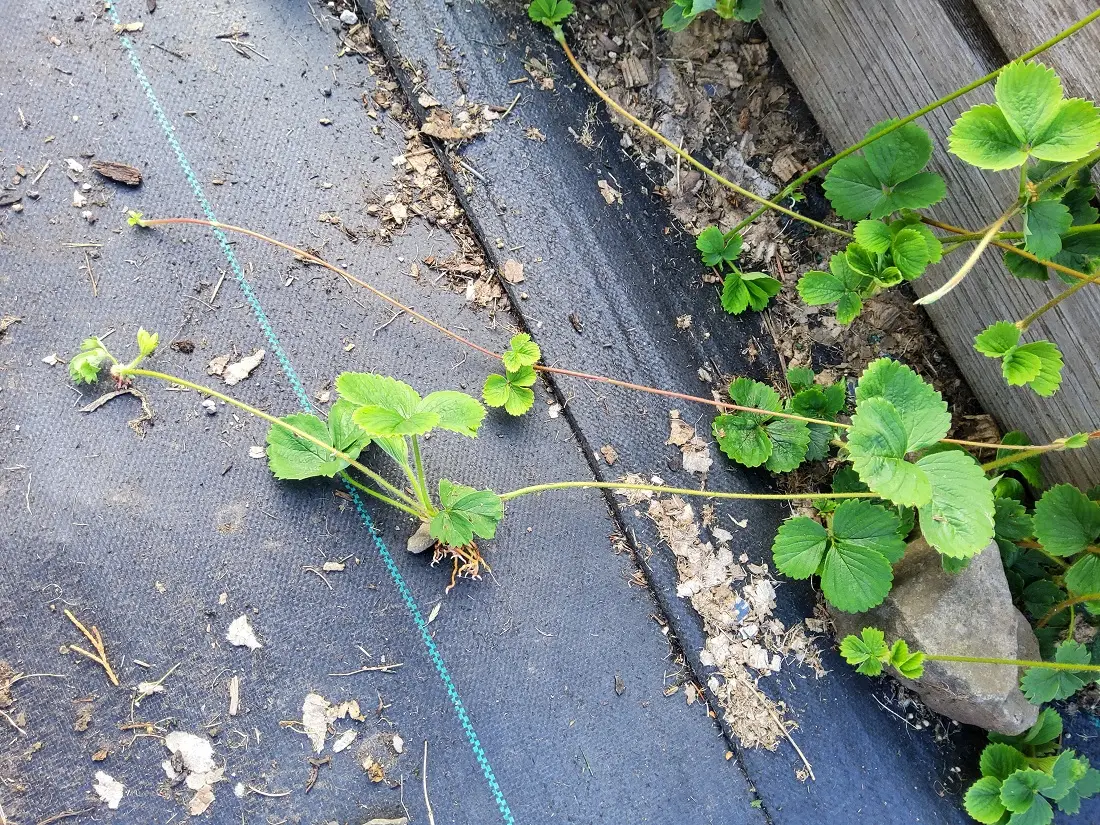
Marshall Strawberry plants can form very long runners
The discovery
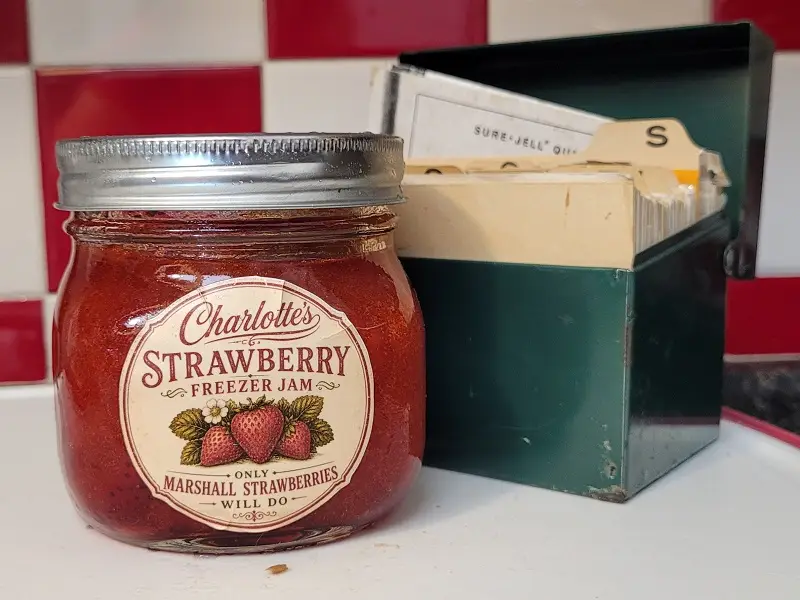
My father gave me my mother’s old green tin recipe box. Among handwritten index cards and yellowed magazine clippings was a berry-stained card from a Sure-Jell box. When it slipped from my hand, I noticed writing on the back: “Charlotte said use Marshall’s.”
What were “Marshalls”? I called my mother-in-law—Charlotte’s daughter—who replied with a voice full of smiles: “We picked Marshalls when we were kids. Grandma had a big patch in her backyard.”
I never heard of Marshall strawberries, but I was determined to learn everything about this elusive variety. My discovery led me on a five-year journey into the legend of this phenomenal berry.
An heirloom nearly lost
Marshall strawberry (Fragaria × ananassa ‘Marshall’) emerged in the late 19th century from a random seedling discovered by Marshall F. Ewell of Massachusetts. Celebrated for its exceptional flavor—described as “exceedingly handsome, splendidly flavored, pleasantly sprightly, aromatic and juicy”—pioneers carried them across the country, and it became the centerpiece of Pacific Northwest berry farming through the mid-20th century.
The Orcas Island Berry Growers Association formed in 1935 to manage the booming Marshall industry during the Great Depression (HistoryLink 2024). By 1938, the Olga Strawberry Barreling Plant was processing Marshalls by the tons for shipment across the Pacific Northwest (HistoryLink 2024).
However, qualities that made Marshalls beloved also doomed them commercially. The Marshall was so full of sugar that its shelf life was measured in hours rather than days (Oregon Strawberry Commission 2007). Their delicate skin bruised easily. Their soft flesh couldn’t withstand long-distance shipping. They had poor disease resistance against the devastating strawberry crinkle virus.
Farmers sacrificed flavor for durability and yield, phasing out the Marshall by the mid-1960s. In 2004, the Marshall’s precarious status was formally recognized when Renewing America’s Food Traditions (RAFT) named it one of the 10 most endangered foods in America. By then, only a handful of plants survived, in the single digits, held at the USDA’s National Clonal Germplasm Repository in Corvallis, Oregon.
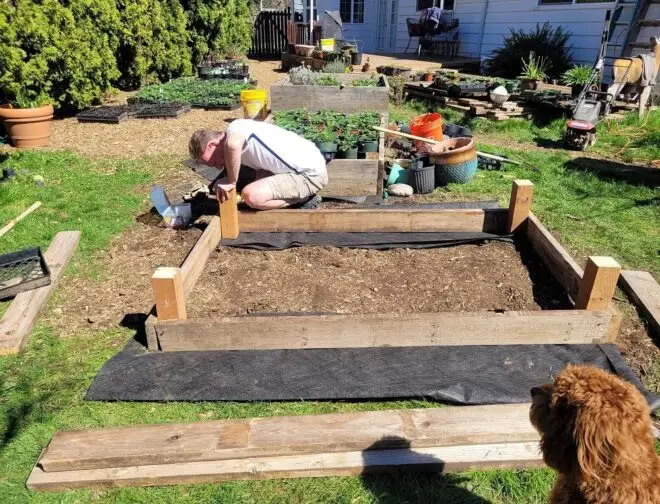
Building the perfect bed to grow Marshall strawberries
With all projects, learning comes from trials, such as Nitrogen deficiency in your strawberries
Revival through dedication
Thanks to passionate gardeners and organizations like the Vashon Island Growers Association and Oregon Strawberry Commission, Marshalls are making a comeback in home gardens and small farms. These deep, dark red berries offer bold sweetness, soft texture, and complex floral-berry notes—but they demand to be eaten fresh or preserved locally, not shipped across the country. Their beauty lies in their ephemeral perfection. While modern berries are bred for shelf life, Marshalls offer something rarer: a fleeting, vulnerable excellence that’s more experience than commodity.
Rather than through any grand institutional effort, this revival happened the way heirloom plants usually come back—through the stubbornness of a handful of people, many of them women, who refused to let one disappear.
Its survival owes everything, first, to the USDA National Clonal Germplasm Repository in Corvallis, Oregon, just a couple hours from my own nursery. When commercial growers walked away from the Marshall in favor of sturdier, blander berries built for shipping, the repository quietly kept the variety alive in cold storage—a genetic lifeboat waiting for someone to come looking for it.
Someone did. In 2007, artist Leah Gauthier—who goes by “Jane Strawberryseed” in her preservation work—obtained a single runner with six additional immature plants from the Corvallis repository while living in Boston (Washington Times-Herald 2014). She carried those plants through multiple cross-country moves, propagating them along the way, and eventually built a one-woman distribution network, shipping starts to growers across the country (Science Friday 2015). Her goal was never to hold onto the Marshall herself, but to spread it so widely that her own role would become unnecessary—letting the berry survive through an informal community of backyard growers rather than a commercial operation.
That network reached Patti Hilgenberg, a horticulturist at the Chicago Botanic Garden, who received three Marshall plants from Gauthier in 2012. She got them into the ground at the Regenstein Fruit & Vegetable Garden, and within a year had propagated 50 plants—enough to begin sharing her own stock with growers and chefs (Chicago Botanic Garden 2017).
On the other side of the country, the revival took root independently on Vashon Island, Washington. Longtime resident Patty Hieb and her husband Hooper Havekotte bought an old property in Dockton and discovered Marshall plants still growing there, descended from stock the previous owner had sourced from that same Corvallis repository. Around the same time, islander Cindy Stockett tracked down her own Marshalls through a preservation group on nearby Bainbridge Island and began propagating them, eventually replanting some at Vashon’s historic Mukai Farm & Garden (Haulman and Donnelly n.d.). Pacific Northwest garden writer Ann Lovejoy added her own chapter, buying a former Marshall farm on the island and using her “Green Gardening” column to connect home gardeners with sources for the plant (Green Gardening with Ann Lovejoy 2013).
That farm—the Mukai farm—carries its own weight in the Marshall’s story. Founded in 1926 by Japanese immigrant B. D. Mukai, it grew into a 60-acre strawberry operation, and Mukai himself pioneered a cold-barreling process that let the famously fragile berry survive the trip across the country—solving, decades before I ever touched a Marshall plant myself, the exact problem that had doomed it commercially (Walk the Farm 2023). After the family’s farm was sold, a nonprofit called Friends of Mukai formed to preserve the site, now listed on the National Register of Historic Places (Washington Trust for Historic Preservation 2017). This year, the farm marks its 100th anniversary (Mukai Farm & Garden 2026)—and Vashon’s Strawberry Festival has already honored the connection, naming “Mukai’s Marshall Strawberry” grand marshal of its 2022 parade (Vashon-Maury Island Beachcomber 2022).
None of these women were scientists chasing a preservation grant. They included an artist, a horticulturist, gardeners, and neighbors who thought a good strawberry was worth saving. That’s the same instinct that brought the Marshall to my own nursery—and it’s what sent me down my own rabbit hole.
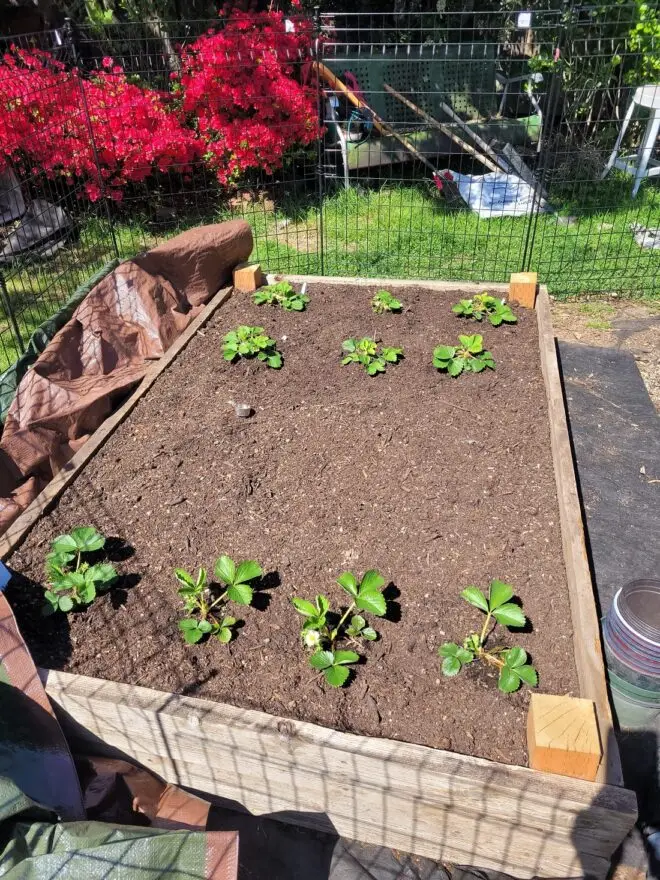
The planting of the first Marshall strawberries in the raised planter box.
The three-year wait
After my deep dive into Marshall history, I convinced my husband to build another four-by-six-foot raised bed. We mole-proofed, weed-proofed, and filled it with organic soil and compost. Then I began my online search and found only a few nurseries offered limited supplies. May 2021 sold out. March 2022 sold out again.
I vowed 2023 would be different. I set a phone reminder for February 1, 2023. At midnight, I logged onto the nursery website. At $20 per plant, I could afford six. Heart racing, I clicked “Pay Now.” Success!
My wait was over when the Marshalls arrived in March. I sheltered them in the greenhouse until the last frost and planted them in mid-April. I maintained watering schedules and hand-picked every slug and snail. Following best practices, I removed all but a few first-season blossoms and runners to encourage healthy root development for a more plentiful second-year harvest.
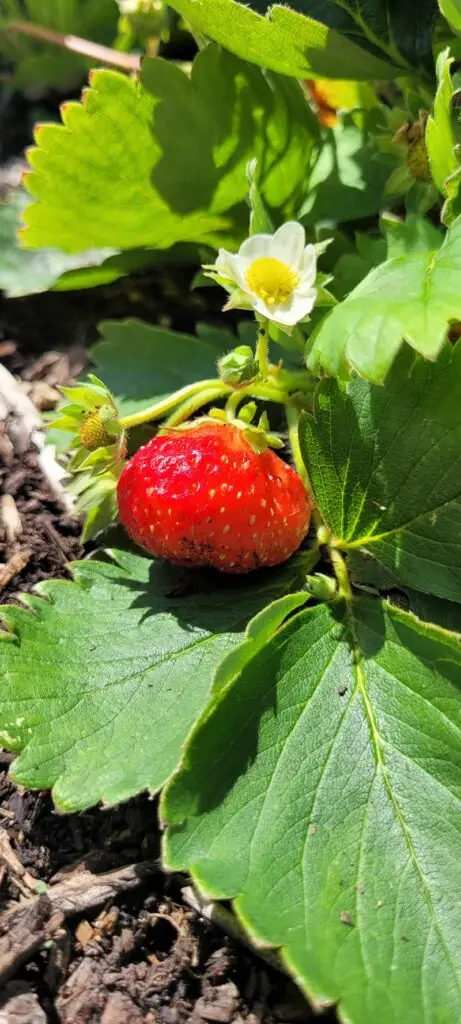
On June 7, 2023, I found one perfect berry ready for picking. My husband, official taste tester, split it in half. The sweetness we tasted was powerful—the flesh both firm and yielding, like a ripe raspberry.
“Holy cow! That’s a Marshall?” he exclaimed. It tasted exactly like childhood. “How long until we have enough for jam?” Not until the second year, I told him. His face fell.
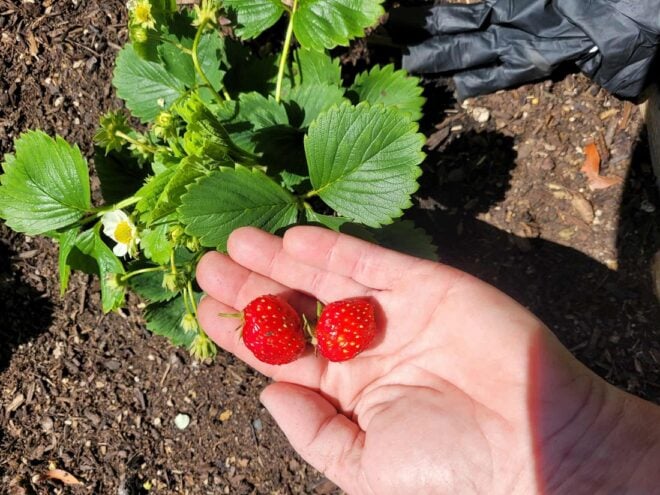
Fruit from the 1st Harvest of Marshall Strawberries
Mission accomplished
Spring 2024 arrived with excruciating anticipation. Within two weeks, I counted 38 blossoms. Days later, they doubled. That year we harvested enough Marshalls to make half a batch of freezer jam.
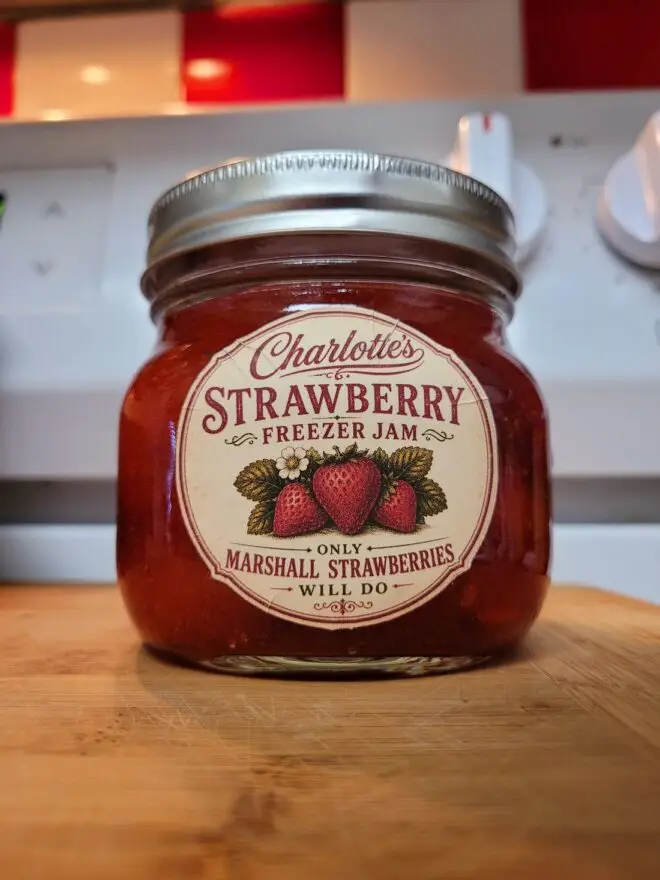
When the crucial moment arrived, I handed my husband a spoon. I watched intently as he dipped it into the ruby-red concoction. The moment it touched his lips, a glowing smile washed across his face. He held up the spoon declaring, “You did it! This is Grandma Charlotte’s strawberry freezer jam!” Then, sheepishly: “We’re not sharing. Maybe next year?”
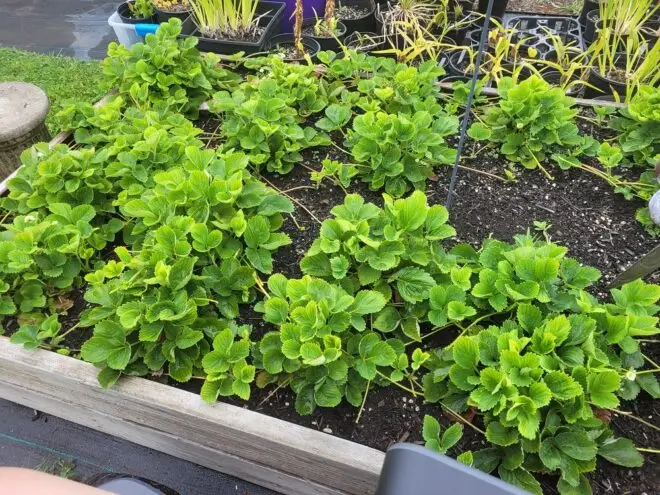
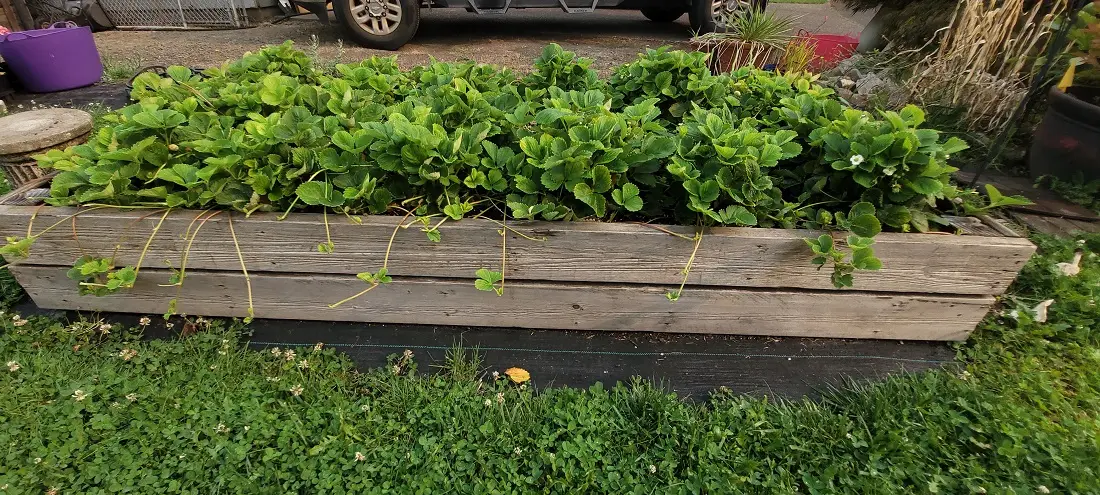
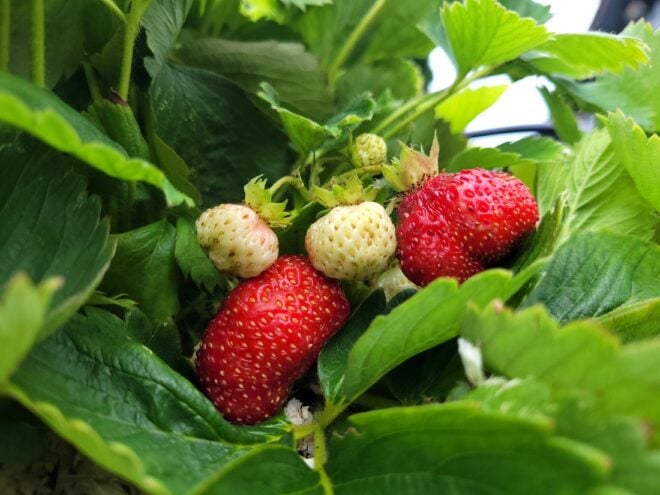
By the 3rd year, the Marshall beds were bursting with berries
Marshall showing good growth stage contrasts
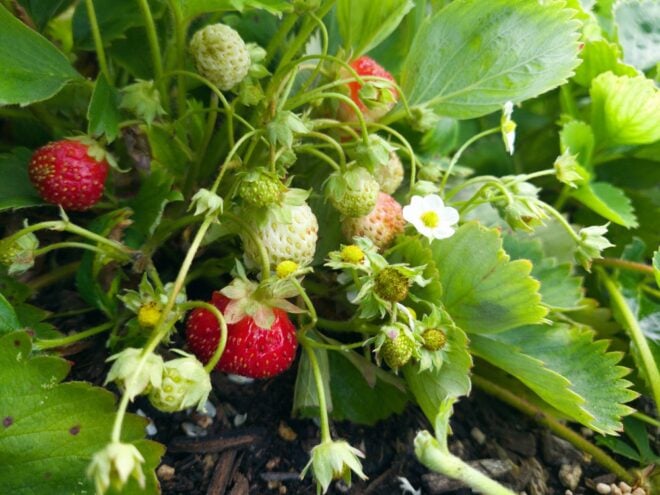
Marshall strawberries ripening and almost ready for harvest.
Why heirlooms matter
In our era of homogenized supermarkets and fruits bred for shipping rather than soul, the Marshall reminds us some treasures aren’t measured in tonnage. They’re measured in flavor memory, community effort, and gardens tended with care.
Today, only a handful of growers, small farms, and gardeners tend this fragile variety. The stock remains rare. However, small markets, heirloom plant suppliers, and historical societies are keeping the legacy alive.
When you bite into a true Marshall, you taste not just fruit, but history—the open fields of the Pacific Northwest, the summers of old, and the work of dedicated hands and hopeful hearts. A taste that reminds us some beauty is fragile—and worth preserving.
Preserving such varieties is an act of resistance—a statement that taste and biodiversity matter. What we savor or lose shapes our culture, farms, and land. The Marshall will never again dominate commercial production. However, with love and care, it can become a treasure in any home garden. My quest to recreate Grandma Charlotte’s strawberry freezer jam proved certain journeys are worth the wait.
Grandma Charlotte's Strawberry Freezer Jam Recipe
Ingredients:
2 cups crushed strawberries (about 1 lb.)
2 tbsp lemon juice
4 cups sugar
1 box (1.75 oz) Sure-Jell pectin
3/4 cup water
Directions:
Step 1. Crush hulled strawberries well (not puréed). Measure exactly 2 cups Step 2. Mix strawberries, lemon juice, and sugar. Let stand 10 minutes, stirring occasionally. Step 3. Boil water and add pectin, stirring constantly for 1 minute. Remove from heat. Step 4. Add pectin to strawberry mixture. Stir for 3 minutes until sugar dissolves. Step 5. Pour into five clean eight-ounce freezer jars, leaving one-half-inch headspace. Let sit loosely covered at room temperature 24 hours, then seal and freeze.
Storage: Store the jam in the refrigerator or the freezer. The jam will last in the refrigerator for 3 to 4 weeks and in the freezer for about a year.






Responses