Plant Recommendations by Pacific Plant People highlight climate-resilient, water-wise, and habitat-friendly plants well-suited for the Pacific region. Many recommendations prioritize native species, but some non-natives that thrive in a Mediterranean climate are also featured.
For Best Viewing, please use Desktop or Rotate Mobile View to Landscape
Jennifer is a California licensed Landscape Architect and educator with over 20 years professional experience. Her qualifications include being a LEED Accredited Professional, ReScape CA Qualified Professional and Rater, and Qualified Water Efficient Landscaper. She grew up in Southern California but earned her BLA in Landscape Architecture from Oklahoma State University. Jennifer is self-employed; she enjoys a wide mix of projects from landscape architectural design work to consulting and public speaking.
All photographs courtesy of the author, Jennifer de Graaf
Verbena lilacina
Plant family: Verbenaceae
Genus: Verbena (more recently Glandularia)
Species: lilacina
Description
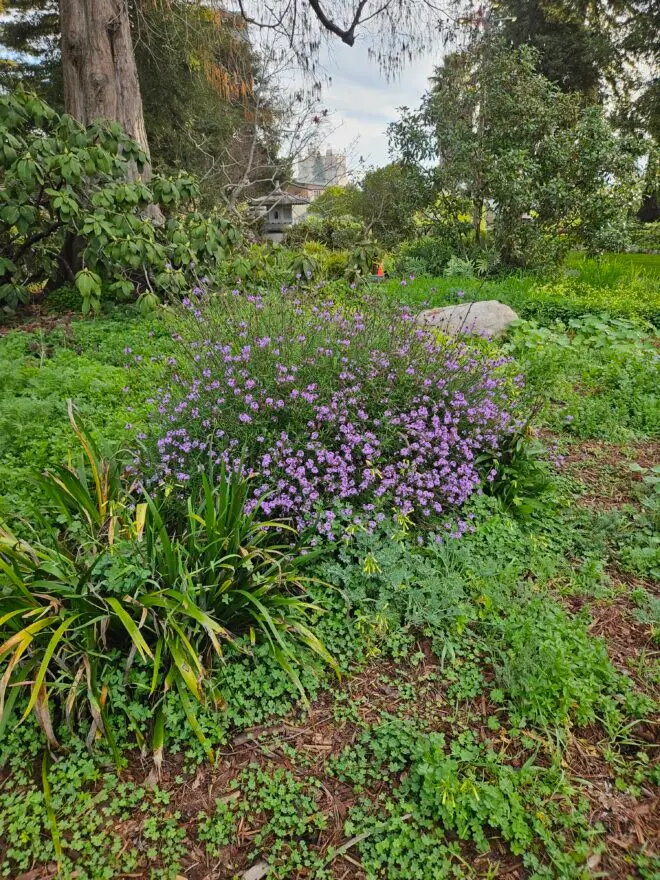
A fast growing, mounded subshrub with fine textured, dull green foliage and small, pale pink or purple flowers. It is not showy except for the flowers that may bloom year-round.
Verbena lilacina 'de la mina' flushed out with new flowers and foliage in February, taken at The Gardens at Lake Merritt, Oakland, CA. by Jennifer de Graaf
Water Use
WUCOLS (a California database) has it listed as Low to Moderate water needs depending on region. It tolerates garden conditions well provided it has adequate drainage.
Conditions When It Thrives
Well drained soil and not too much water
Ecosystem Services
Habitat / food plant for butterflies, bees, hummingbirds.
Native To / Ideal Geographic Range
Canyons and bluffs in maritime desert scrub below 3500 ft. ‘De La Mina’ is a cultivar of Verbena lilacina from Cedros Island and the nearby Baja California coastline. ‘Paseo Rancho’ was introduced as a distinct cultivar by the California Botanic Garden in Claremont, CA.
Special Features
Year-round blooming, pollinator support, and can tolerate some deer browsing.
Availability
Widely available, check or call ahead due to variations in seasonal inventories. ‘De La Mina’ seems to be easier to find than ‘Paseo Rancho’
Size at Maturity
De La Mina’ 2-3’ ht x 3-4’ sp
‘Paseo Rancho’: 3-4’ ht x 4-5’ sp
Hardiness / Zones
Cold tolerant to 25 degrees F
Habit
Verbena lilacina is listed as a perennial by some, shrub by others, and a subshrub by most. It has herbaceous stems that can become woody with age.
‘De La Mina’ Rounded habit, more compact
‘Paseo Rancho’: somewhat rounded, more wild and airy habit than the other cultivar, will probably lean toward the sun.
Solar Exposure
FULL SUN near the coast or in mild climates, appreciates shade in hot, dry inland areas
While the native range is part of Mexico, these plants are treated as part of the California floristic province because the native range shares California’s mediterranean climate.
Also, Verbena lilacina is listed by many nurseries and databases as a shrub, a perennial, or both, but it is actually a subshrub. Subshrubs have herbaceous stems that become woody with age. The herbaceous foliage is less cold tolerant than the woody parts and may die back seasonally.
Why They Love It
I love that the fragrance is a little sneaky. It isn’t popular merely for fragrance, but if you find yourself near enough and paying attention, it will reward you with a light, sweet scent.
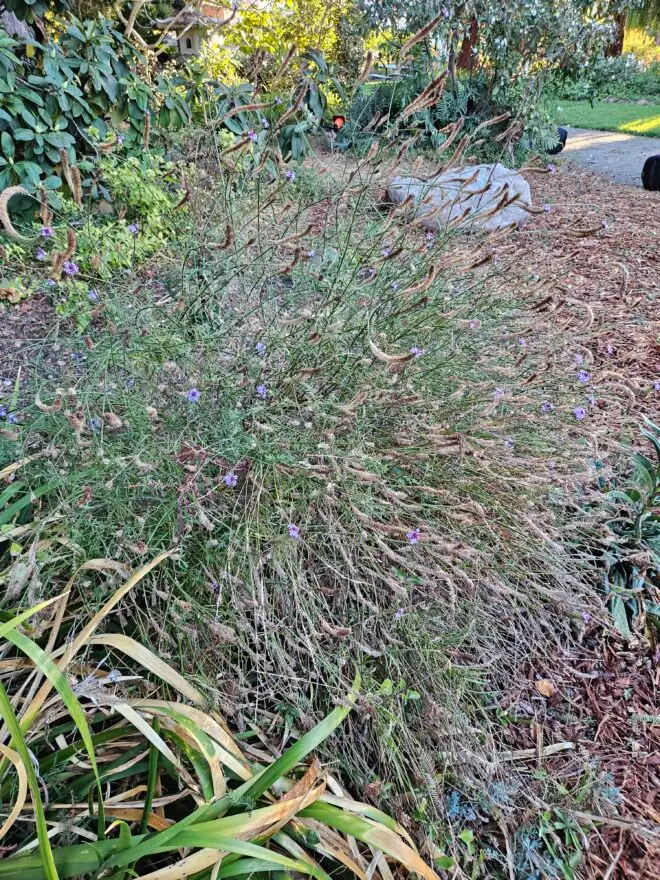
Verbena lilacina 'de la mina' still blooming in November at The Gardens at Lake Merritt, Oakland, CA. by Jennifer de Graaf
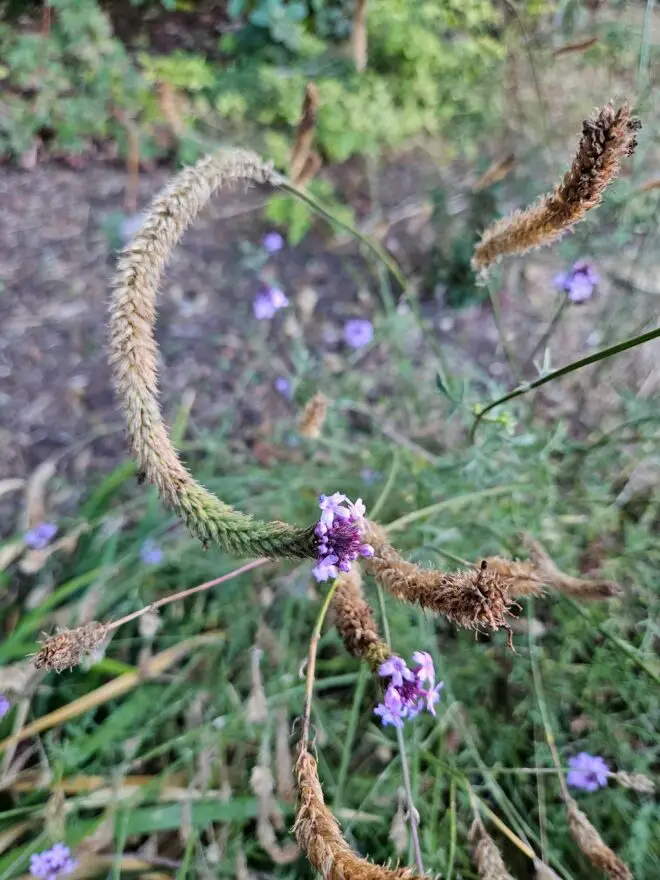
Verbena lilacina 'De La Mina' still flowering in November showing the fuzzy caterpillar looking spent inflorescence. By Jennifer de Graaf taken at The Gardens at Lake Merritt.
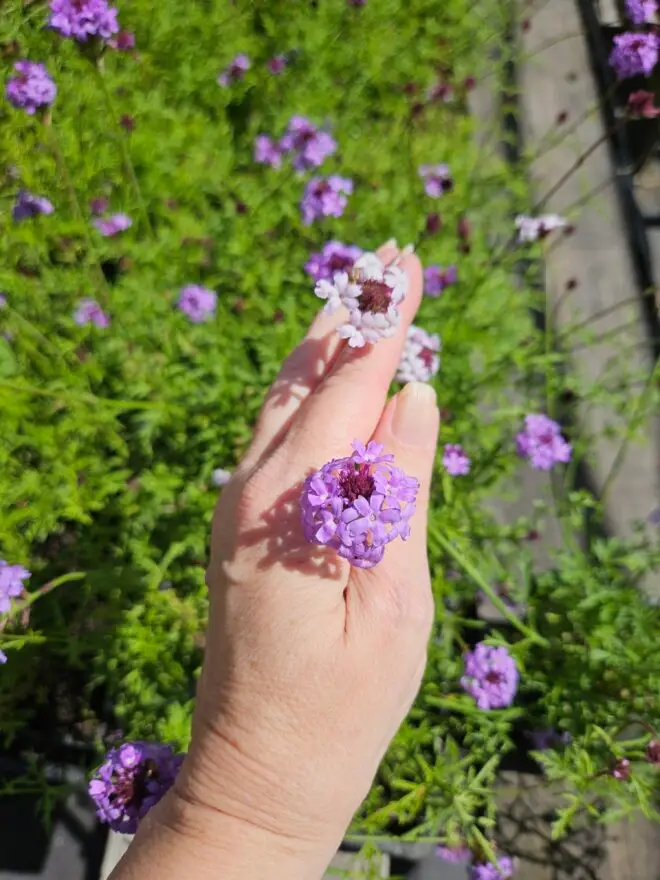
Flowers of Verbena lilacina ‘Paseo Rancho’ (above) and ‘De La Mina’ (below), taken by Jennifer de Graaf at Curious Flora Nursery.
Seasonal Appearance/Dormancy
It is evergreen or semi-deciduous in summer if it doesn’t get supplemental water.
Blooms year-round as long as it is actively growing with a bigger flush of flowers in the spring. It is a sequential bloomer, making the late summer look a bit scrappy with the blooms at the end of fuzzy brown spent inflorescences that kinda look like caterpillars.
Advice, Design, Care Notes
The fine, ferny dull green foliage is not an eye catcher, it is better used as a foil or a filler to show off others. It is the flowers that, bouncing around on thin stems, will catch your interest like colorful dots a little bigger than the size of your thumbnail.
Pruning advice varies widely. Some say deadheading is all that is needed, others recommend cutting back nearly to the ground. The larger cultivar ‘Paseo Rancho’ which is the one I grow tends to lean over, so I cut back any deadwood and out-of place stems randomly during the year. With the potential to grow and bloom year-round in mild climates or go summer dormant or die back due to cold, pruning will need to be based on the habit of the plant where it is planted, not based on advice from another growing condition.
Other Thoughts
I had seen ‘De La Mina’ online, but the photos did not inspire. It is a similar color to Lantana montevidensis (Purple Lantana) which I’m not a fan of, but after twice seeing it from a distance and making my way over to see what ‘that plant over there’ was and finding ‘De La Mina’ both times, I decided to pay closer attention.











Responses