We envision a resilient world dependent on the thoughtful cultivation of plants

Reducing and Managing Particulate Pollution in a Garden

Articles: Reducing and Managing Particulate Pollution in a Garden

Summer 2026 

As anyone who has cared for many types of gardens knows, some plants are dustier than others. While uncomfortable to prune and work around, dusty plants are a great sign—they have been protecting the property’s occupants from particulate pollutants.

For gardeners in areas with high concentrations of particulate matter (PM)—such as along busy roads, near freeways, or next to stop signs—managing dust is vital for personal and public health. Whether coarse (PM10), fine (PM2.5), or ultrafine (PM0.1), breathing the particulates from vehicles, fires, or industrial combustion can lead to a variety of health maladies, including respiratory irritation, difficulty breathing, irregular heartbeat, aggravated asthma, decreased lung function, cancer, and premature death.

A review of research suggests that landscape design, plant selection, and targeted maintenance practices can reduce numbers of particulates and improve air quality (Abhijith et al. 2020; Barwise et al. 2020). Strategies include maintaining airflow, growing a mass of foliage, choosing plants with particulate-grabbing attributes, and fostering a landscape that both minimizes and disposes of particulates.

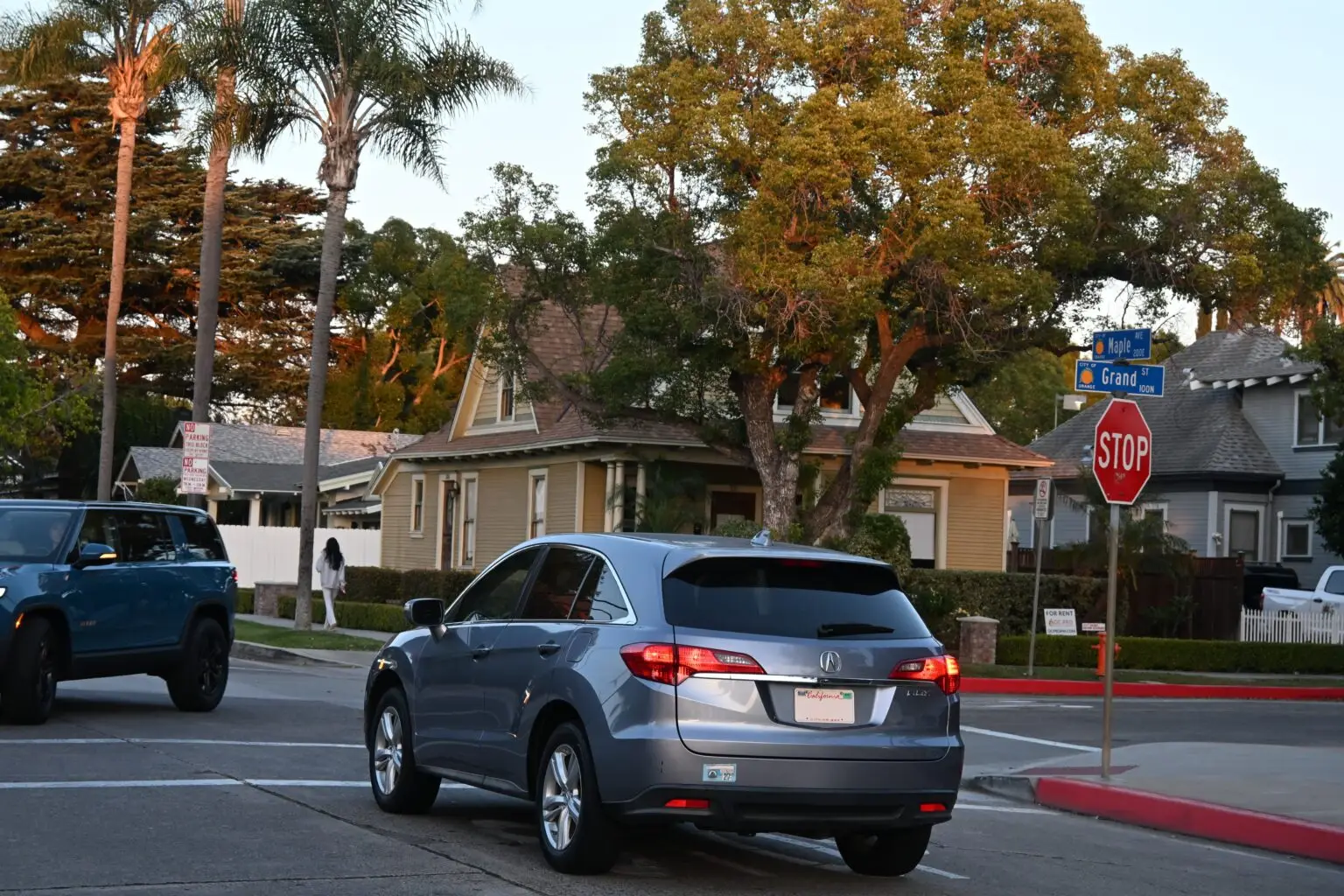
Living within the roar of traffic is terrible for respiratory health, more so if the cars are constantly braking and accelerating, as both increase the numbers of harmful particulates. Credit: Doug Kent

Strategies

Cooling

Cooling a landscape improves the quality of air by stopping gaseous and fine particulates (PM2.5) from reacting to sunlight and heat and turning into secondary pollutants, which are often more dangerous.

Cooling landscapes naturally is covered in detail in “Designing for Thermal Comfort and Cooling,” Pacific Horticulture, Fall 2024, at Pacific Horticulture | Designing for Thermal Comfort and Cooling

Airflow

Good airflow will disperse and dilute pollutants, boosting the quality of air. Low levels of airflow allow particulates to settle and accumulate.

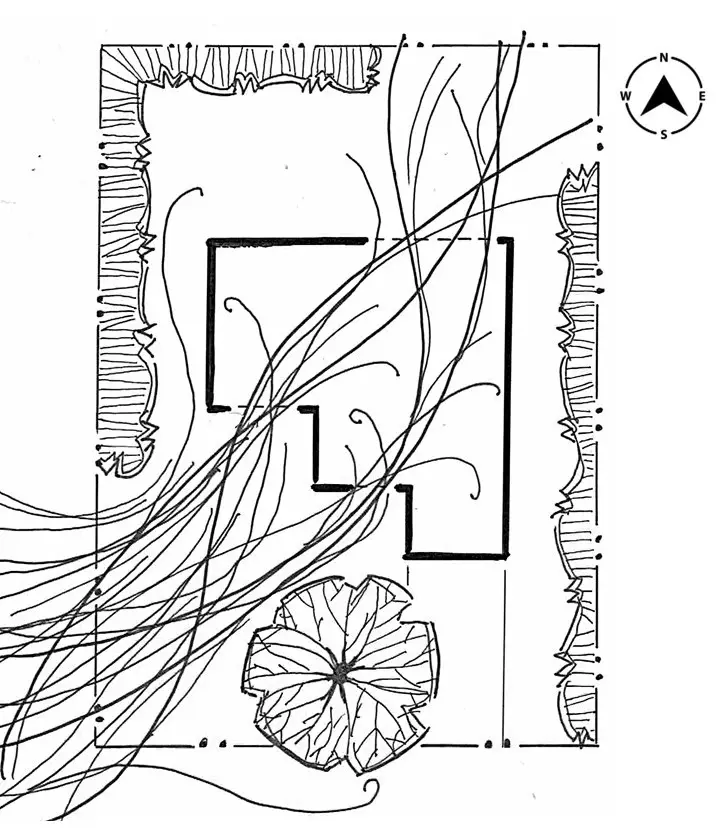
Ideally, winds below 12 mph (19 kph) should be welcomed and escorted throughout a property. Winds over 12 mph should be blocked, as their strength picks up dust. As a rule of thumb on the West Coast, convective afternoon winds—our sea breeze—should be encouraged to roam a property. These typically blow between the south and west. Katabolic winds, such as those called Diablo and Santa Ana, should be blocked. These typically blow from the northeast to southeast. A 12 mph wind is considered gentle but will still flip your hair, move leaves, and create wavelets on water.

In my congested neighborhood in Southern California, the sea breeze starts in the south, dies in the west, and is the strongest and cleanest when coming from the southwest in late afternoon. It would be wise for my neighbors to leave that part of their property open and escort that cooling, cleaning, and calming wind onto their property. Notably, good airflow is beneficial to both personal health and landscape health.

Illustration: Single family property with southwest left open. A particulate reducing landscape will welcome the afternoon breeze and escort it through the property. Credit: Doug Kent

Overall Coverage

Increasing air flow and diluting polluted air does not remove the problem, it simply moves it downwind. This is where plants come in. Research has consistently shown that communities with a higher abundance of green space have lower numbers of PM10 and PM2.5 particulates (Abhijith et al. 2020). Naturally, the greater the green mass, the greater the reduction.

There are three strategies for increasing vegetation without restricting airflow around living spaces. First, ensure gaps between the growing tips of large vegetation, such as trees, to allow wind to move between them. Second, avoid shearing plants, which creates a dense, impenetrable mass. Instead, prune from the interior outward, creating an open and airy plant that is more porous to airflow. Third, avoid creating living spaces for people close to the downwind side of tall obstructions, such as hedges. The further from the obstruction, the better the air quality.

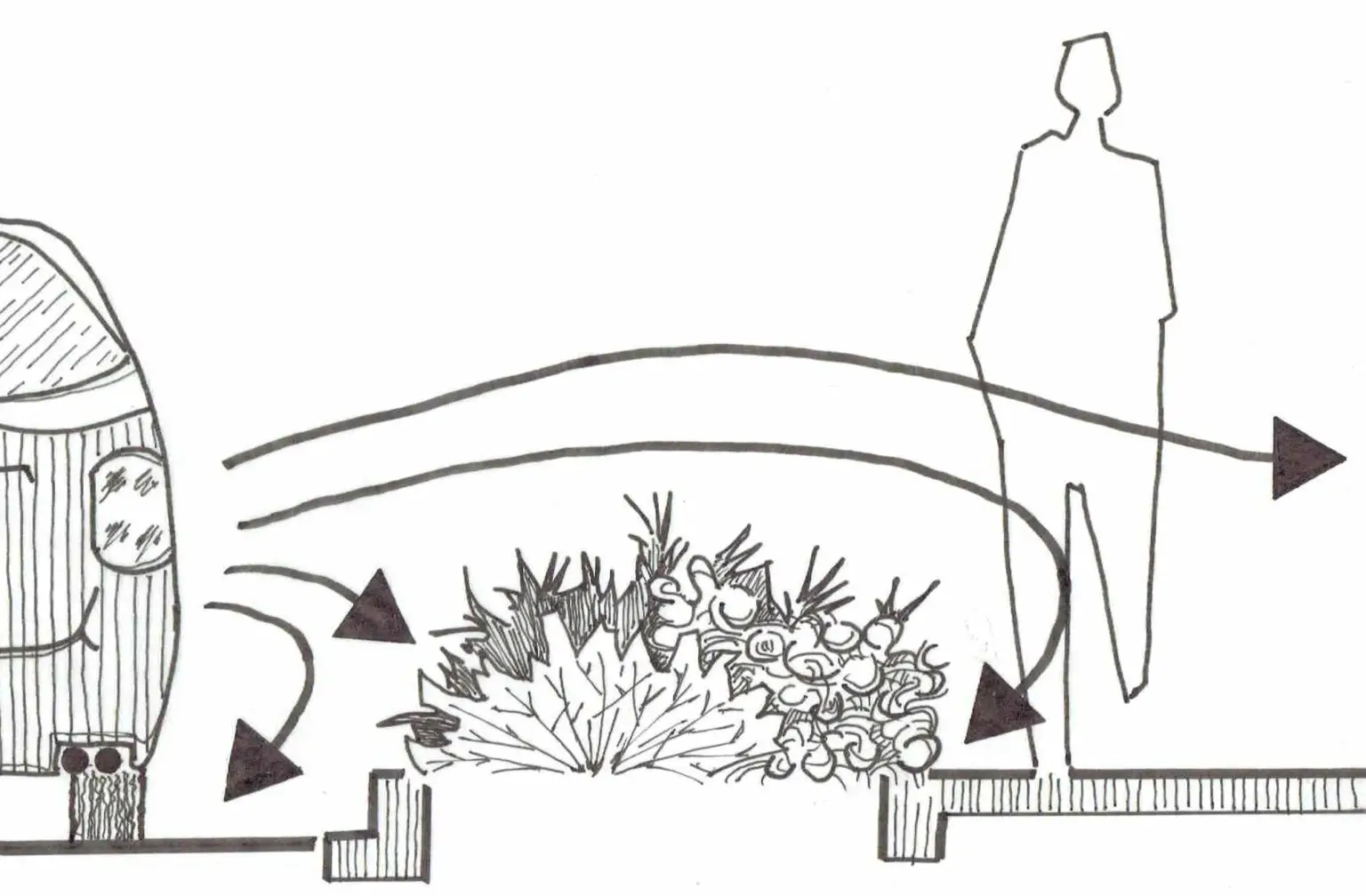
Illustration: Parkway and particulates. Parkways are the first line of defense against roadside pollutants because of their proximity to and preponderance of particulates. The goal is to grow dense, stiff shrubs tall enough to capture particles but not tall enough to slow airflow. Credit: Doug Kent
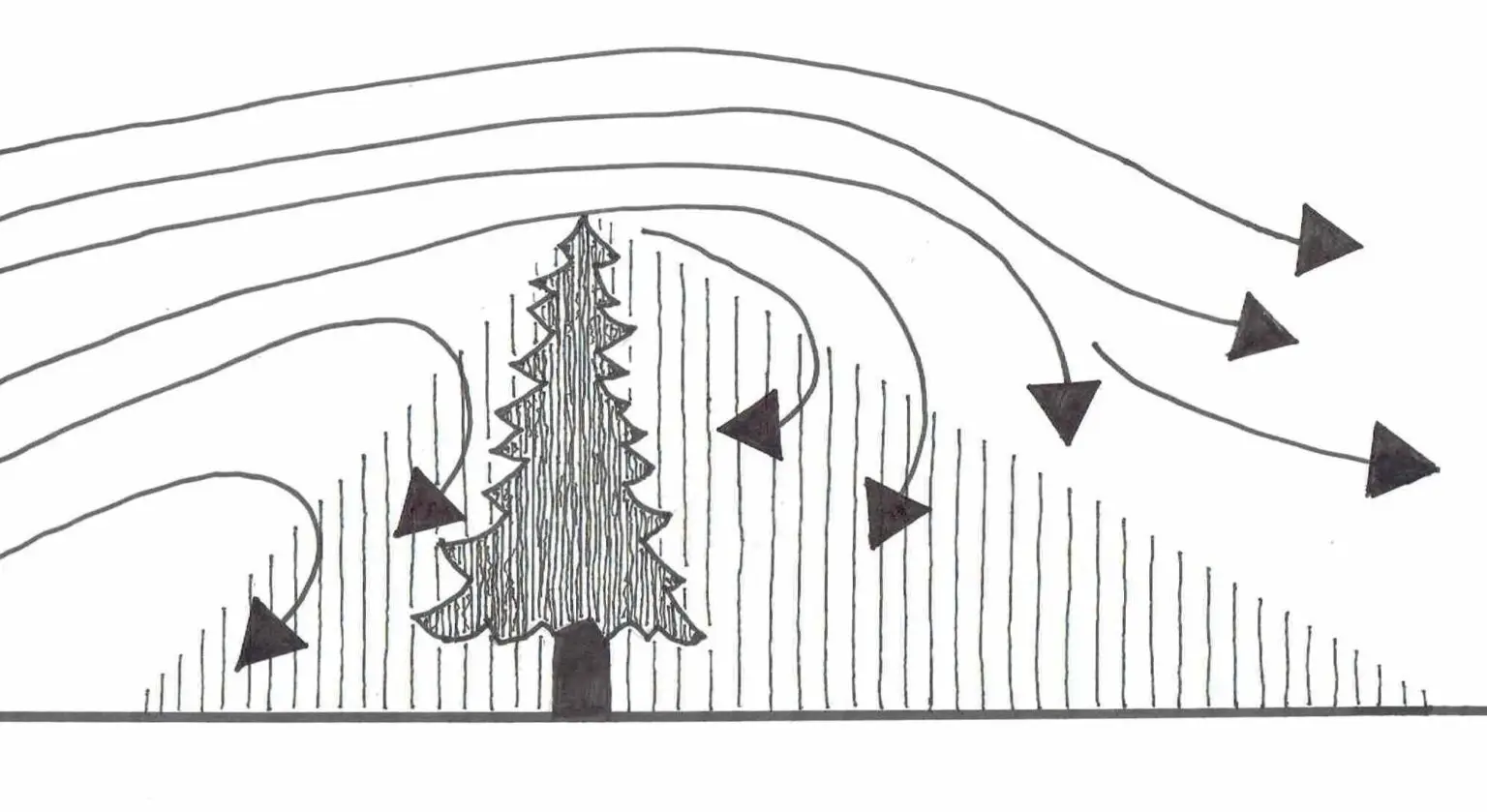
Illustration: Particulates and wind shadows. Particulates will accumulate on both the windward and leeward side of an obstruction, with more particulates accumulating on the traffic side of the obstruction. While concentrations will be higher around the object, overall concentrations will be lower downwind. Credit: Doug Kent

Plant Selection

Plants remove particulates from the air through several mechanisms. They disrupt and slow airflow, allowing particulates to settle out; they provide obstructions which hold on to particles; and some plants can suck particulates in through their stomata (pores) when they open to exchange gases (Tomson et al. 2021; Wang et al. 2019).

While I can anecdotally attest to some of the plants below (they always seem dusty), the list should be taken with a grain of salt. Rates of pollutant removal have as much to do with air speed and plant type as air temperature and humidity. Furthermore, the research supporting this list comes from other continents, evaluates small groups of plants, and cannot seem to agree on the total volume of particulates likely to be removed (a little, some, a lot). This is an area that needs more research.

Ideal Characteristics

Evergreen: Screening from air pollution is a year-round job. The West Coast can experience some of its worst air quality during winter due to a decrease of convective winds and an increase in inversion layers.

High leaf area index (LAI): This is a measure of leaf density; the greater the density, the greater the pollutant removal. As a crude measure, LAI asks whether you can see through a plant, sort of see through a plant, or cannot see through a plant.

Furrowed, ridged, or wrinkled leaves: When it comes to airflow, the greater the texture, the greater the friction, resulting in tiny vortexes that diminish wind speeds and enable the settling of particulates.

Stiff leaves: Flexible leaves bend with the wind, while stiff leaves disrupt and slow it, allowing fine particles to settle out.

Small leaves: A mass of small leaves is more effective at screening particulates than a few large leaves that would occupy the same space.

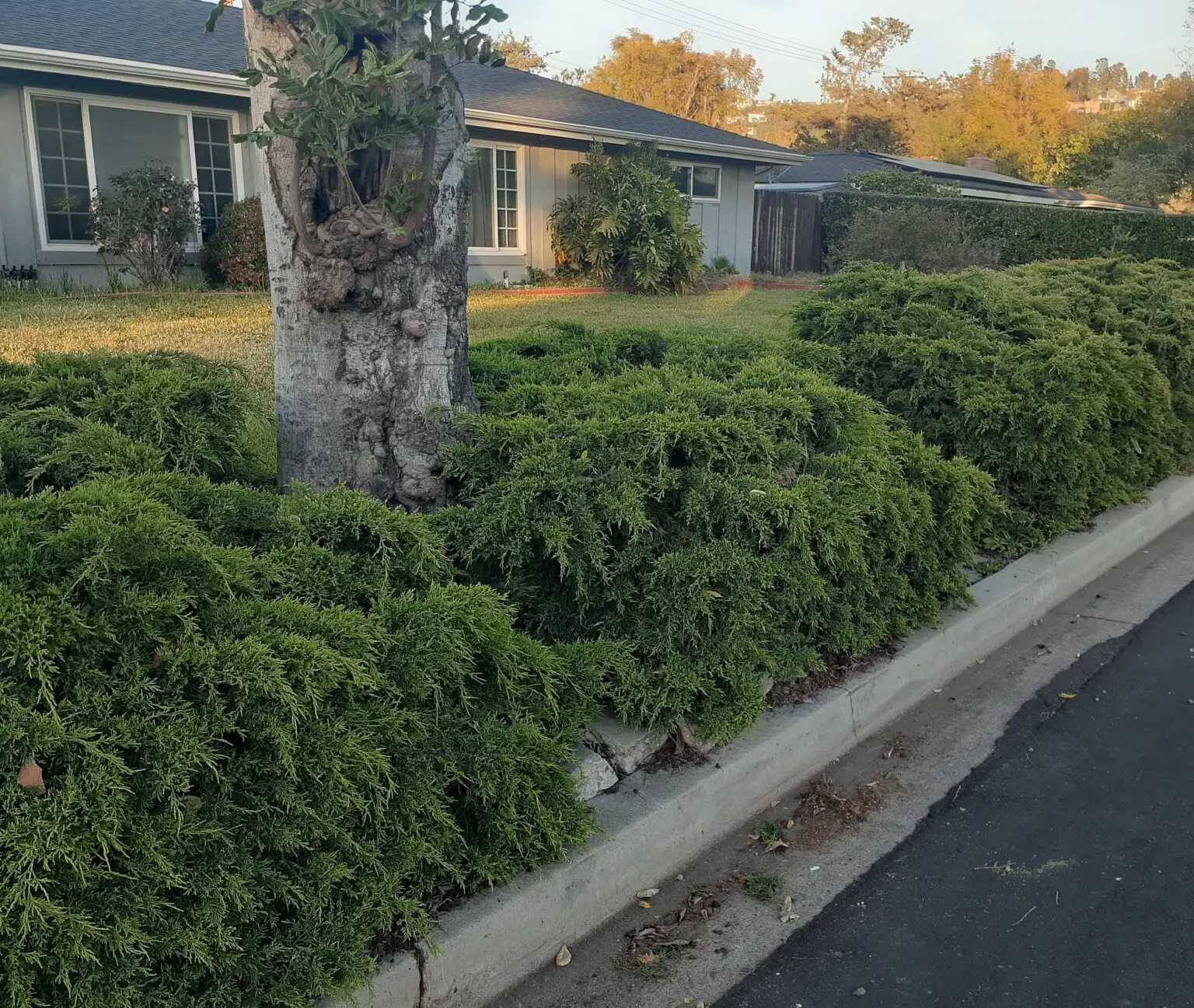
Juniper (Juniperus), with its dense, ridged, and stiff scale-like leaves, is one of the best for pulling particulates. It is the perfect parkway companion along this zooming street. Notably, the shrubs are not tall enough to noticeably reduce air speeds, which prevents particulates from settling around the house. Credit: Doug Kent

Trichomes: The Pluses and Minuses

Trichomes are the tiny hairs on the underside of some leaves that are also named cilia. These hairs have a variety of functions, such as helping reduce water loss when the stomata open to exchange gases. Some trichomes are granular and can also help to either attract or repel insects.

From an air quality point of view, cilia have both positive and negative effects on numbers of particulates. On the plus side, plants with cilia filter more particles from the atmosphere than plants without. On the other side, there are two downsides to trichomes. First, the tiny hairs are less likely to release particulates when washed, which means they never make it to the soil where they can be permanently removed from the environment (Yendle et al. 2024). Second, trichomes are a known respiratory irritant when they become airborne, which is common with sycamore. As a rule of thumb for myself, low-growing plants with trichomes are encouraged but plants growing overhead with trichomes are discouraged.

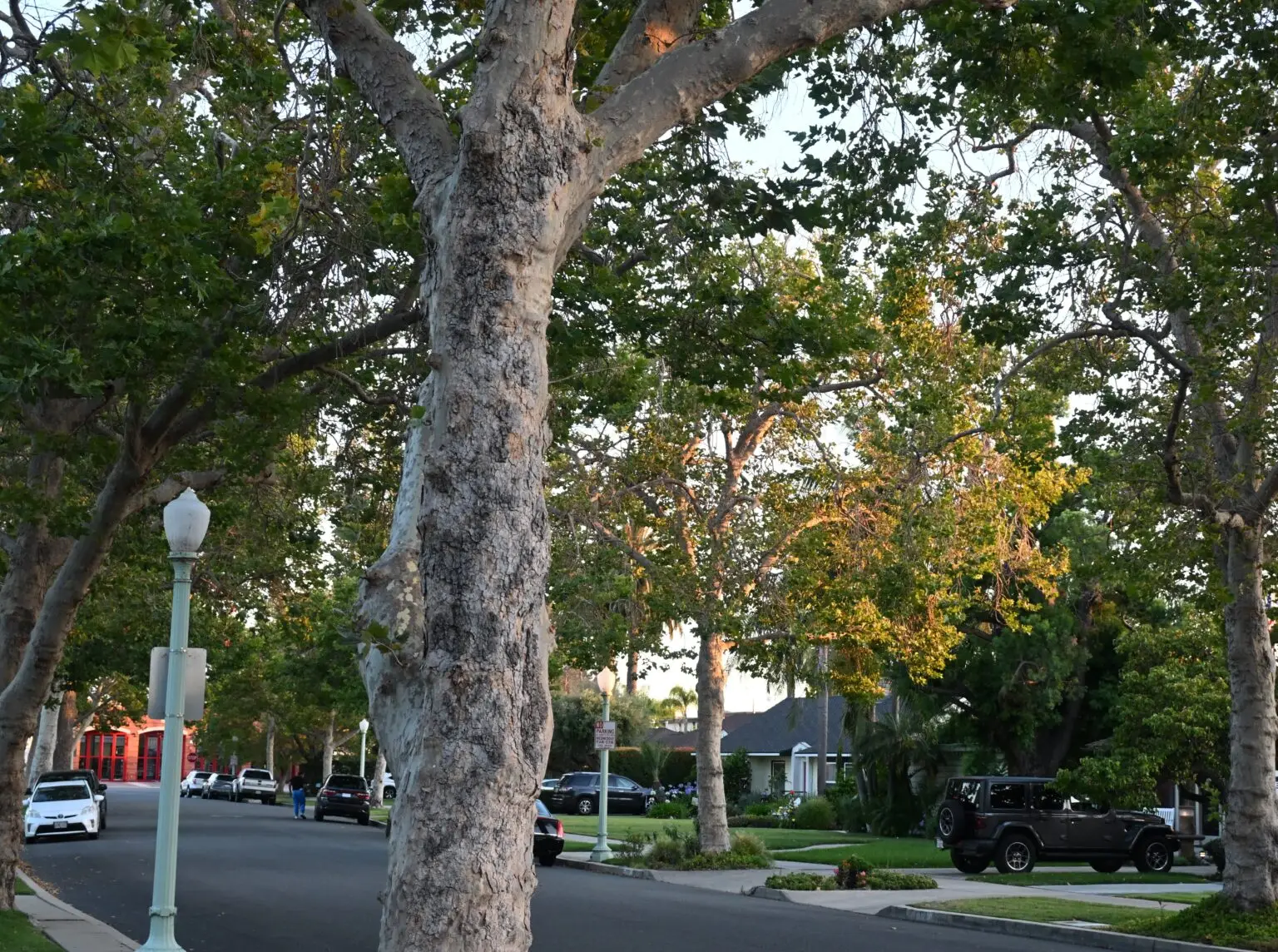
American Sycamores (Platanus occidentalis) along busy streets are a poor choice if prioritizing public health. Not only is their pollen a noted allergen and their trichomes a known irritant, but the trees are above-average producers of BVOCs (biological volatile organic compounds), which interact with sunlight and heat to create ozone, smog, and secondary PM2.5 particulates (Sercombe et al. 2011; Louv et al. 2012). Credit: Doug Kent

List of Plants

The plants below have shown an above-average ability to accumulate particulates (Tomson et al. 2021 and Wang et al. 2019). That said, any surface—any plant—can amass particulates if it obstructs airflow with a textured surface.

Large Vegetation

Cypresses (Cupressus spp.) and junipers (Juniperus spp.) are two genera that consistently show up in studies as plants most capable of removing particulates from the atmosphere. Dense growth, rigid stems, and highly grooved needles and scales means that these plants have all the right characteristics. Some of the other plants mentioned include yew (Taxus baccata), silver maple (Acer saccharinum), silver birch (Betula pendula), Japanese cedar (Cryptomeria japonica), Lawson’s cypress (Chamaecyparis lawsoniana), and elderberry (Sambucus spp.).

Smaller Vegetation

Some of the low-growing plants better capable of pulling particulates include juniper (Juniperus spp.), mullein (Verbascum thapsus), comfrey (Symphytum officinale), borage (Borago officinalis), and nettle (Urtica dioica).

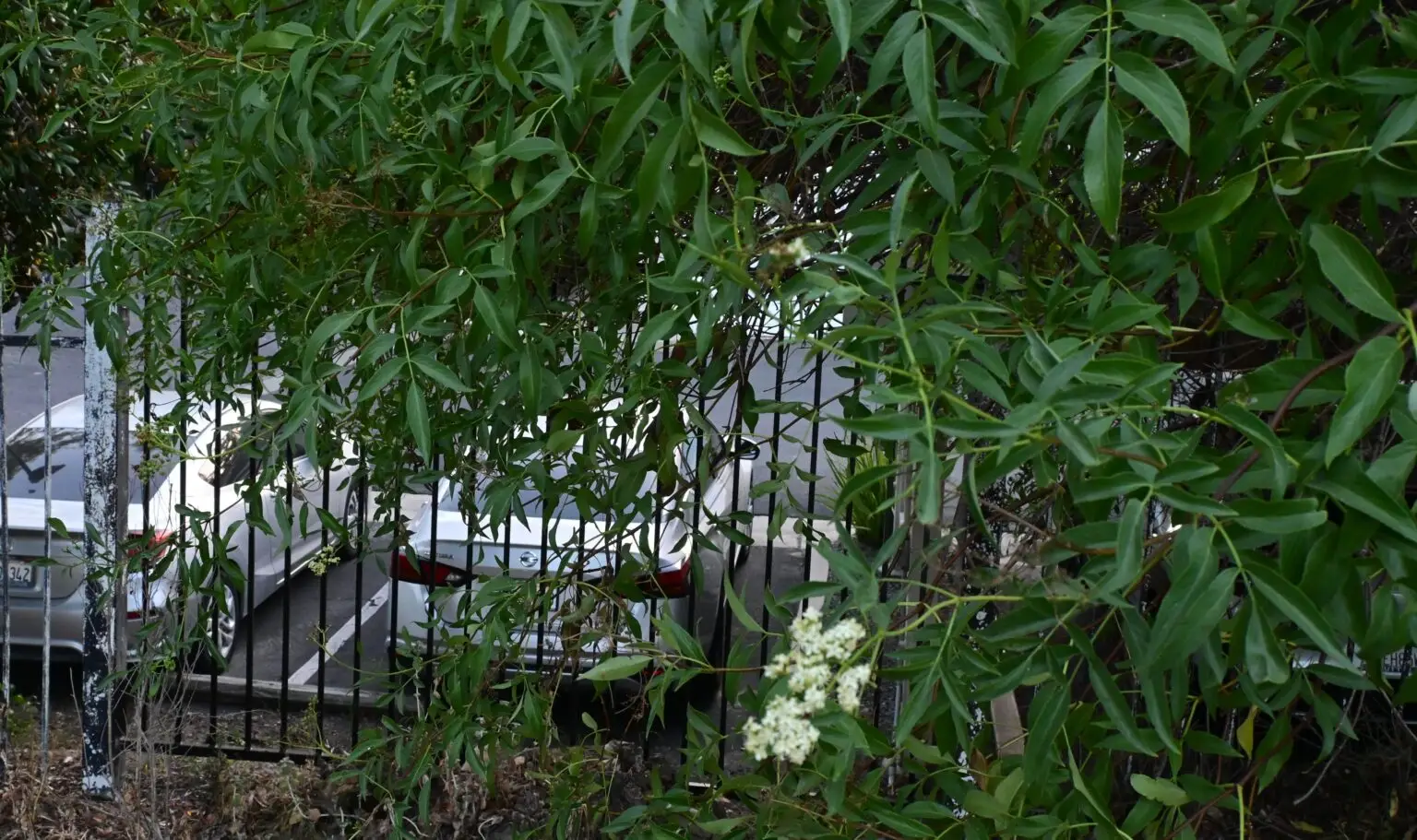
In one study, elderberry (Sambucus) had an above-average ability to pull particulates from the air. Given all its other benefits (wildlife, medicine, craft), elderberry is an advocate for all in urban areas. Credit: Doug Kent

Maintenance

The way we manage our landscapes has an impact on air quality. We can either increase the number of pollutants or reduce them. The maintenance strategies below are aimed at reducing sources, managing captured particulates, and protecting yourself.

Strategies

Protect elders: Large plants are much more effective at pollutant removal than small plants—mass equals mitigation. Protect the sentries that protect you.

Avoid blowers: Blowers elevate fallen dust, fecal matter, mold spores, particulates, pesticides, pollen, and toxins back into the atmosphere. Raking and sweeping produce far fewer airborne particulates.

Avoid two-stroke engines: Fossil-fuel-driven landscape equipment is notoriously polluting. Carbon monoxide, nitrogen and sulfur oxides, particulate matter, and volatile organic compounds (known as VOCs) are byproducts of two-stroke engines. Healthier alternatives include using human-powered or electric equipment.

Prune for airflow: Whether moving a breeze through a plant or a landscape, timely and regular pruning ensures the wind easy passage.

Wash vegetation: Plants do not remove particulates from the air but grab and hold them. Without intervention, these particulates can be propelled back into the atmosphere by brushing, jarring, or in high winds. The goal is to get the particulates to settle into the soil, where they can be assimilated, synthesized, or transformed, and this means washing the plant. Plants in areas of poor air quality should be hosed down once a month during the hotter times of year.

Consider transportation: Moving people and materials in and out of California’s landscapes is not only the greatest use of energy and source of airborne pollutants, but also the leading cause of death within the green industry (Kent 2001). Transportation is costly. Reducing transportation costs involves consolidating trips, shopping locally, carpooling, avoiding rush-hour traffic, and doing more of the work with the people on site. Importantly, regularly maintain vehicles  to ensure optimum performance.

Work with a breeze: If you garden in a city, do your most strenuous work midafternoon and when the convective winds are the strongest. When a night of little or no wind wakes to rush-hour traffic, poor air quality greets your morning.


Air quality improves with consistent airflow. City gardeners should consider doing their most strenuous work in the afternoon and when their sea breeze is over 5 mph (8 kph). Credit: Doug Kent

More research is needed, especially along the West Coast. But that shouldn’t stop you from experimenting, evaluating, and evolving your clean air strategies. I say this because Camellia, Ceanothus, cedar, evergreen cherries, Ficus, lavender, lemonade berry, lemon grass, pine, and rosemary seem like they could do a good job of cleaning air, too.

Biologically, chemically, and hydrologically, urban landscapes are unlike native and wild landscapes. One of the most profound differences is that these are the places you and I live and work, where we breathe and recreate. Nurturing an urban environment that supports a healthier version of ourselves is as essential as creating environments good for everything else.

Bibliography

Abhijith, K. V. and P. Kumar. 2020. “Quantifying particulate matter reduction and their deposition on the leaves of green infrastructure.Environmental Pollution 265, 114884.

Barwise, Y. and P. Kumar. 2020. “Designing vegetation barriers for urban air pollution abatement: a practical review for appropriate plant species selection.” npj Climate and Atmospheric Science 3: 12.

Kent, Douglas. 2001. A New Era of Gardening: A Book on Gardening for Oxygen and a Healthier Atmosphere. Garden Shed Productions.

Louv, Richard. 2012. The Nature Principle: Reconnecting with Life in a Virtual Age. Algonquin Books. P. 206. In the book, he writes “sycamore or liquidambar—these trees are the arboreal equivalent to that ‘66 Imperial my uncle Horton used to drive.”

Sercombe J. K., B. J. Green, J. Rimmer, P. K. Burton, C. H. Katelaris, E. R. Tovey. 2011. “London Plane Tree bioaerosol exposure and allergic sensitization in Sydney, Australia.Annals of Allergy, Asthma & Immunology 107 (6): 493–500.

Tomson, M., P. Kumar, Y. Barwise, et al. 2021. “Green infrastructure for air quality improvement in street canyons.Environment International 146: 106288.

Wang, Huixia, Barbara Maher, Imad Ahmed, Brian Davison. 2019. “Efficient Removal of Ultrafine Particles from Diesel Exhaust by Selected Tree Species: Implications for Roadside Planting for Improving the Quality of Urban Air.Environmental Science & Technology.

Yendle Barwise, Prashant Kumar, K. V. Abhijith, John Gallagher, Aonghus McNabola, and John F. Watts. 2024. “A trait-based investigation into evergreen woody plants for traffic-related air pollution mitigation over time.Science of The Total Environment 914: 169713.

Share:

Facebook
LinkedIn
Email
Print

Responses

Related Posts