Pacific Horticulture’s monthly photo series by renowned garden photographer and Pacific Horticulture Board Member, Saxon Holt of PhotoBotanic and Summer-Dry
Summer 2026
On wildflower hikes when I don’t want to be burdened by gear and only want to carry a camera phone, I use one of my professional go-to flower photography techniques – find a low angle. I’ve always believed that to truly do flowers justice, you have to get right down to their level—and I mean that literally. Don’t look down on them.
When we take portraits of people, we always want to look them straight on and I think that is true with flower portraits. No matter the camera your flower photography will improve immensely if you look them in the eye.
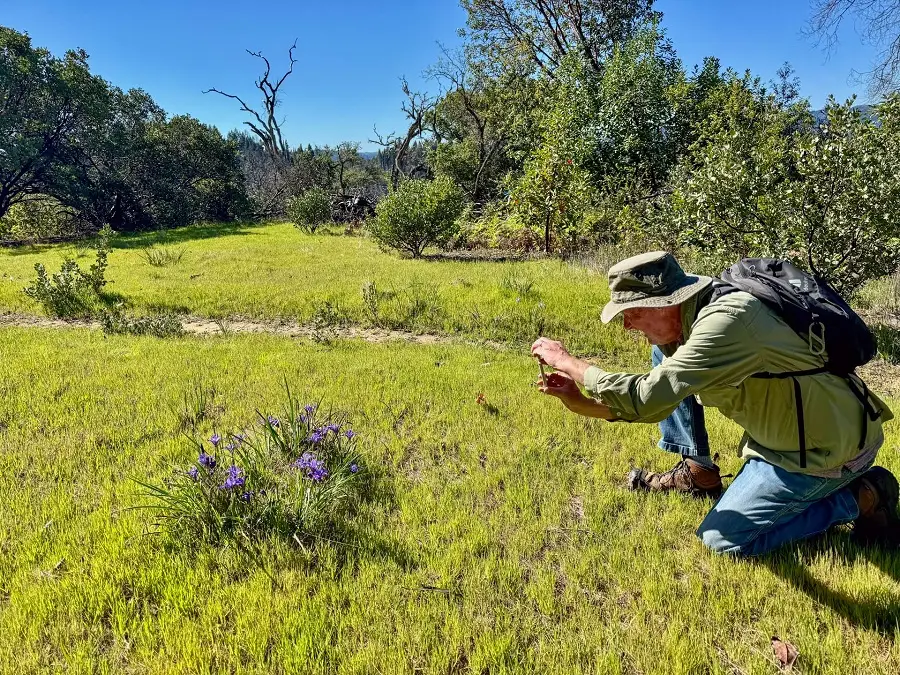
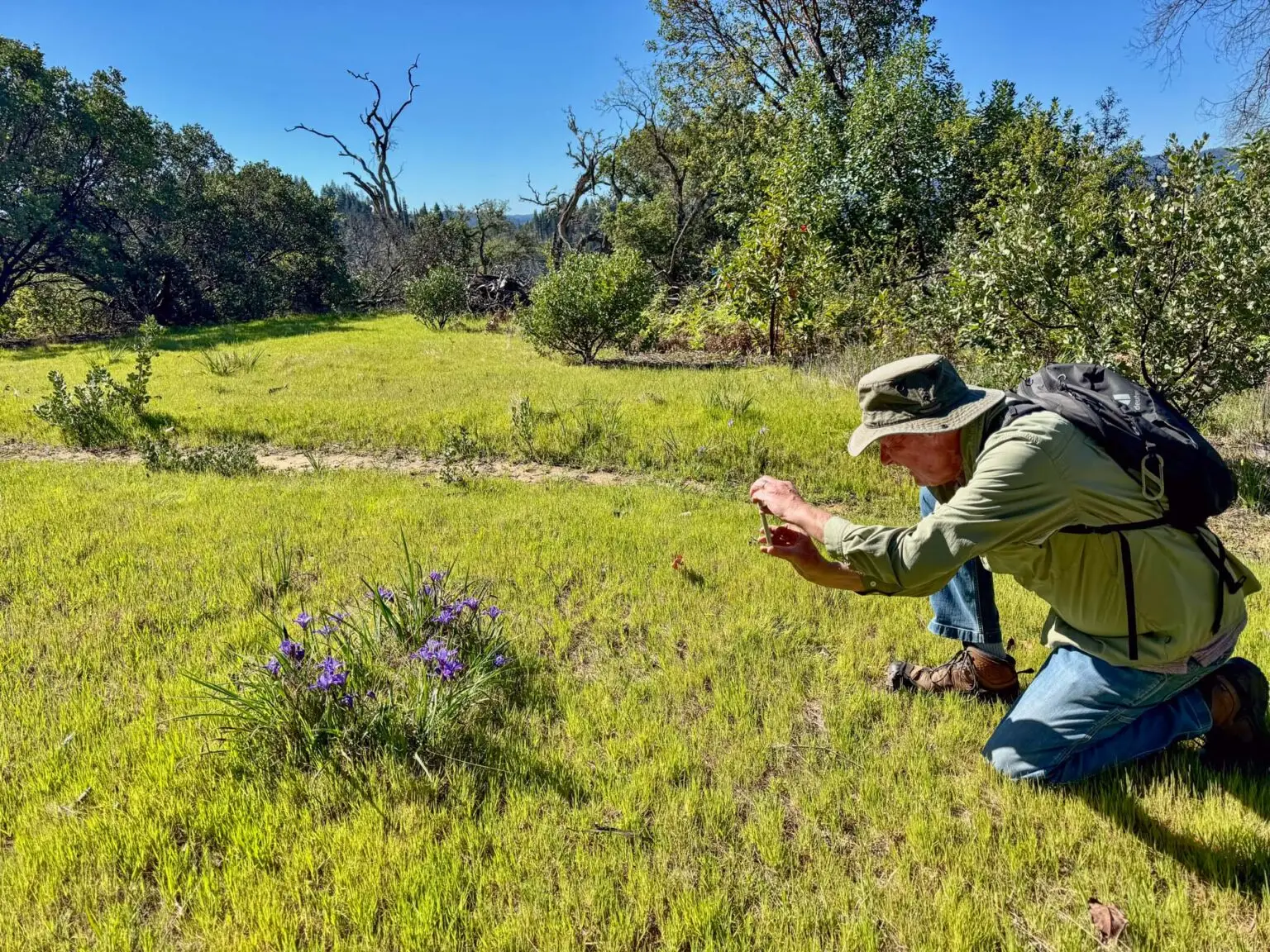
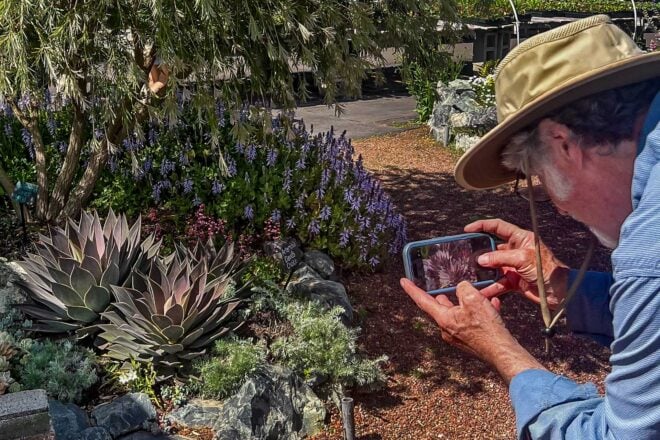
Here’s my friend Phil getting down in a crouch to photograph some Iris microsiphon on a hike last March in Sonoma County
Austin Creek State Recreation Area, Sonoma County
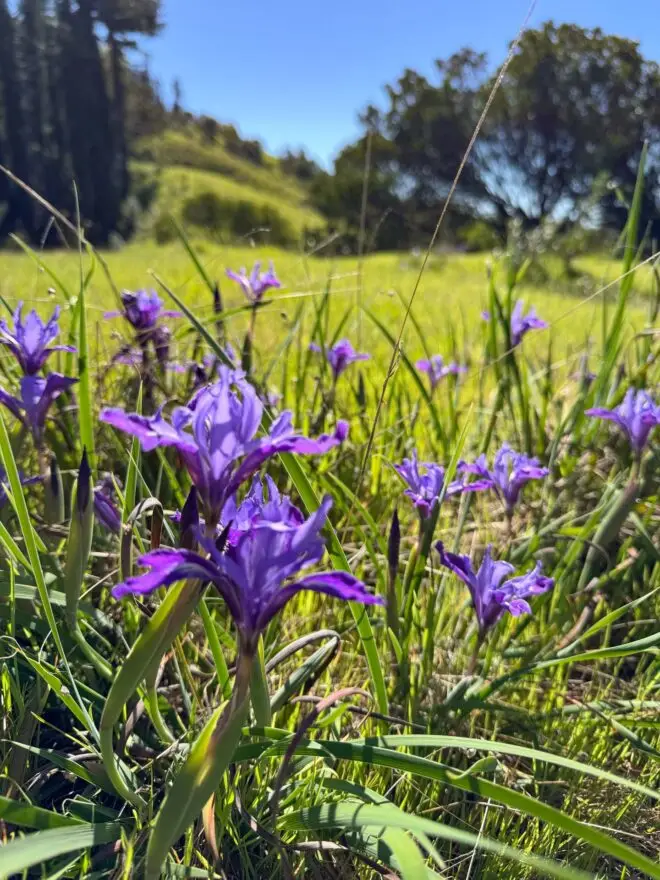
I never saw the photo he took but I got down on my belly to get an even lower angle which also allowed me to include the rolling hills and a bit of the sky.
Iris microsiphon Austin Creek State Recreation Area, Sonoma County
It’s not a super close-up macro, but I like that I can show a fairly large group of flowers in context with the landscape. I want a photo to tell a story, not just a tight shot. Once I’m down on the ground there’s no hurry to grab a picture and I could spend a little time thinking about the composition.
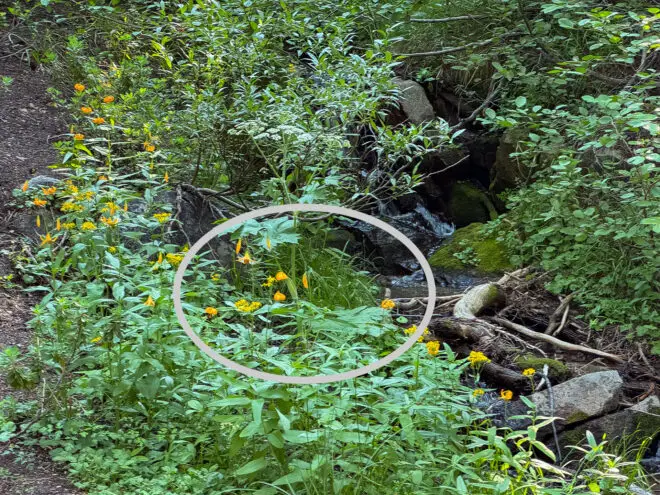
In late July I spent a week at Mammoth Lakes in the eastern Sierras, the height of the mountains’ wildflower season. The snow melt flows into creeks that drain into the lakes that are lush and offer lots of botanizing fun. I knew as soon as I saw these orange specks ahead of me they were going to be lilies.
finding Kelley’s Tiger Lily - Lilium kelleyanum by stream at Mammoth Lakes
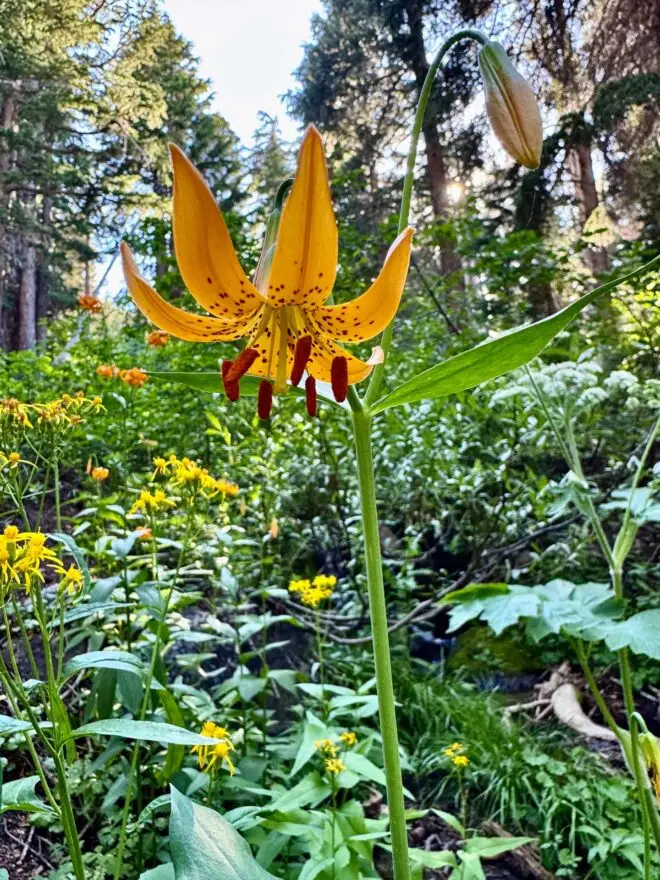
“Hello Lilium kelleyanum, so pleased to meet you. May I take your portrait?”
Kelley’s Tiger Lily - Lilium kelleyanum
Getting down at her level really allowed me to isolate the flower, show how it stands up from the rest of the vegetation, and get a good look at those dancing anthers and spotted petals. I did brighten the flower and open up the shadows with the iPhone tools, put no fancy apps are needed.
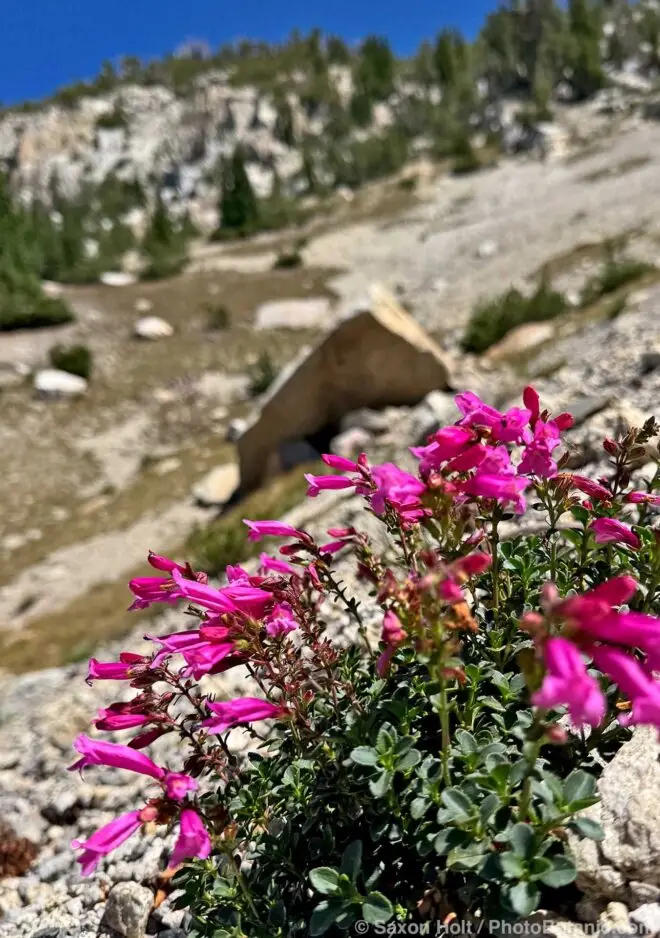
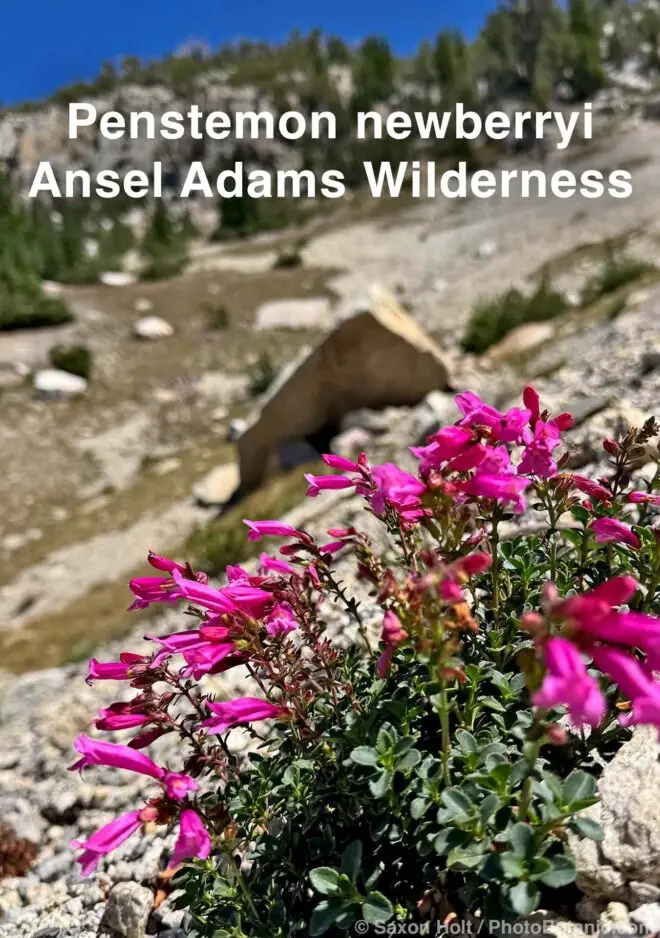
We took a long hike in a grueling trail of mountain scree where I was astonished to see anything flowering. I felt like we were trudging through a moonscape until I saw this bright magenta Penstemon newberryi.
And at that point in the hike, I was really ready for a break. So again, getting down really low, as in the Iris photo, I keep some of the mountain and sky in the composition to create a flower portrait to include the landscape setting.
Penstemon newberryi - mountain pride flowering in scree on Mammoth Lakes trail
I was also close enough to the flowers to know that it was going to throw the background out of focus. Then I could add a little bit of text in the blurry areas when I posted to Instagram.
Penstemon newberryi - mountain pride flowering in scree on Mammoth Lakes trail
This is a professional technique I learned many, many years ago from editors who were always looking for vertical photos with lots of blurry areas to add type. Photos on Instagram always display better as verticals so my training to look for verticals is still paying off.
In part two of the series on wildflower photography we will work on how to compose when there’s a mass of wildflowers to work with.
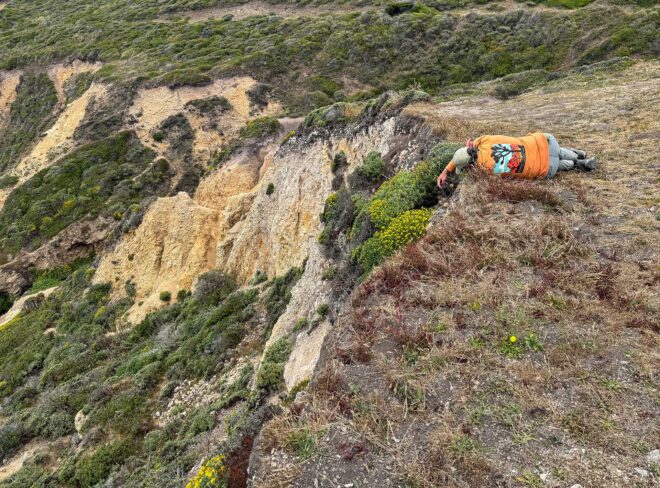
The author taking pictures over to bluff.
About the Series
I began Camera Phones Are Cameras with this full disclosure: I have been a professional garden photographer for 40 years and do not take any of my professional photos with a camera phone. However, almost all the tips I give in my workshops apply to any camera, recognizing the camera is only a tool to capture an image.
It is up to you to take the picture, and if used with intention and consciousness any camera or camera phone can take wonderful pictures; especially if you learn a few techniques.
Read the Full Series Here
Pacific Horticulture Photo Tips Series
We have created a new Landing Page for all of Saxon Holt’s ‘Camera Phones are Cameras’ series of wonderful iPhone tips and tricks.
Every dollar of support goes directly to creatingeducational contentwithin our very lean operation. While much of our team are volunteers, we strive to our editors and staff fairly for their time. This supports ourstrategy to increase the number and impact of climate resilient gardens and landscapes.







Responses