Pacific Horticulture’s monthly photo series by renowned garden photographer and Pacific Horticulture Board Member, Saxon Holt of PhotoBotanic and Summer-Dry
Winter 2026
This is part two of my unexpected photo assignment at Carmel Mission when, last fall I stumbled across a story while on vacation. I wanted to take good pictures but I was visiting the Mission as a tourist with only my camera phone.
You can read part one of the story here where I realized the Mission represented beautiful examples of well adapted gardens to summer-dry climates, and I needed some pictures to illustrate it. They are not restored gardens, in attempting to re-create the original utilitarian space that served the needs of the Spanish missionaries, but re-envisioned for the needs of modern gardeners who need examples of drought tolerance and resiliency.
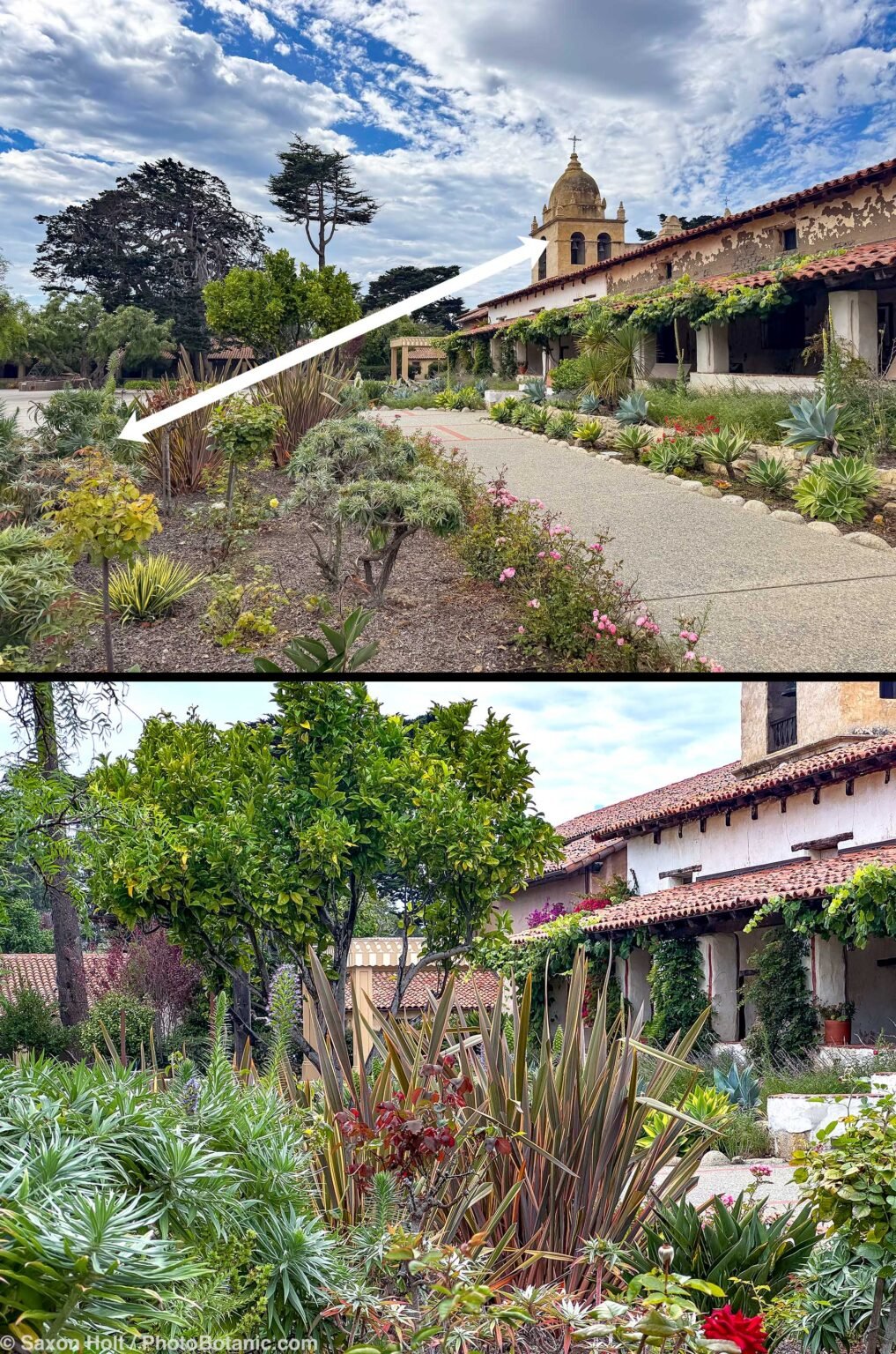
The photojournalist in me jumped into action because I did have a camera with me, my phone; I began treating my visit as an assignment. Camera phones are cameras, I started working the scene, trying to make the garden look more mature and filled-in than it actually was.
Part one of the story showed how I came to make this photo, to make the garden look more grown in than it actually was:
Carmel Mission
After making a few wide shots I realized I would need some details.
When you’re out making garden photos sometimes a detail of a plant will bring back more intimate memories of your visit than the wide-angle shots, and a photo story can get boring if all the points of view are the same.
At some point in almost every one of these lessons I say the key to getting a better photograph (with any camera) is to take the picture with intention. Know why you want to take the picture and then let the camera help you compose it. The process of finding and then making a compelling detail shot is probably harder than the wide-angle views. Way too often I see detail photos where the background competes for attention rather than complements the shot.
This can be particularly challenging for camera phones because they are usually built-in with a wide view lens that makes almost everything sharp, thus the background to whatever detail you are trying to isolate may end up competing for attention.
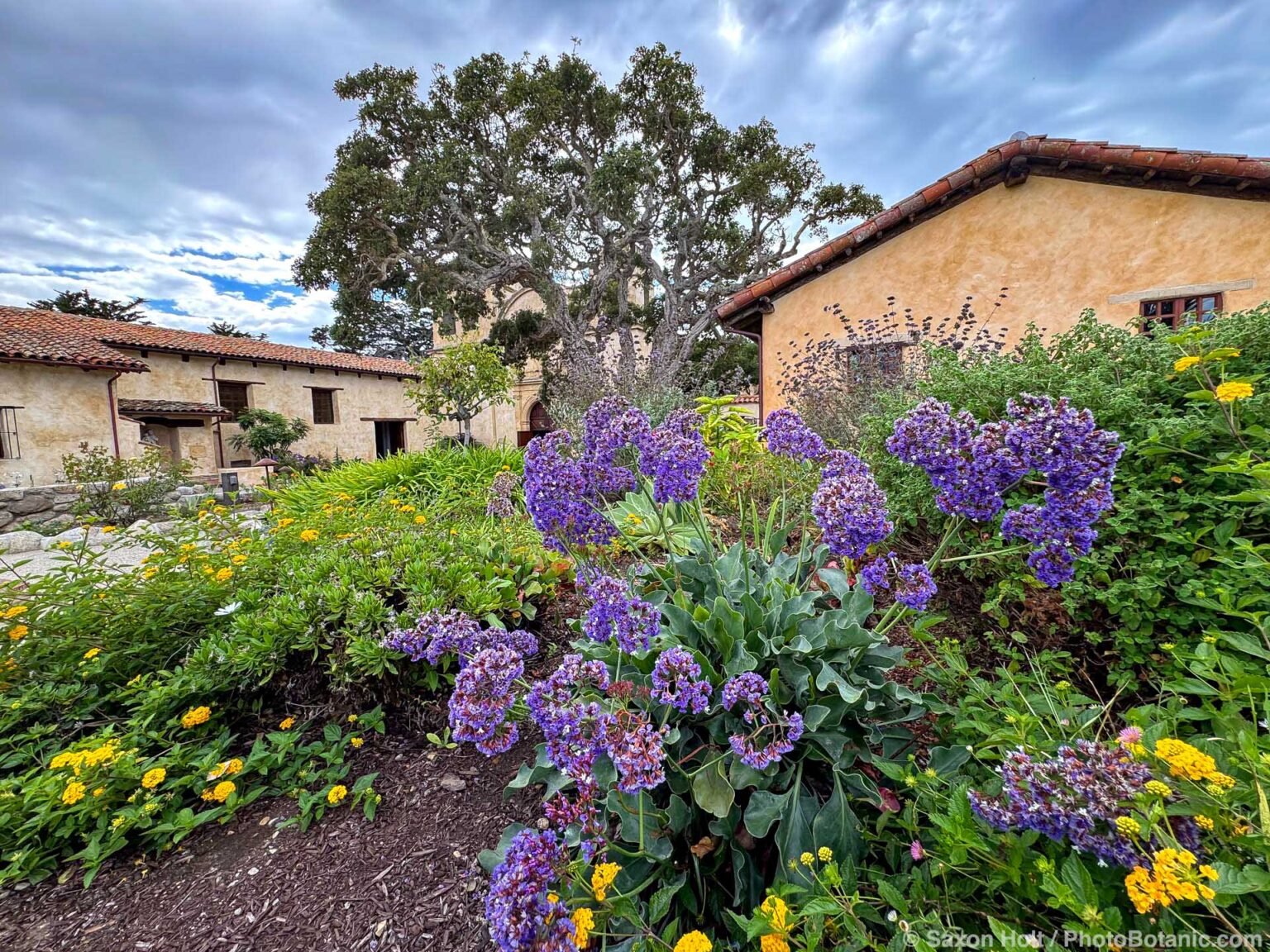
I was delighted to find a flower bed in one of the side gardens of the Mission where the royal blue of a large statice (Limonium sp.) grabbed my attention.
Carmel Mission
I grabbed the shot right away just to be sure I got something and starting to look for more well composed photo to isolate the Limonium. I wanted to be sure to use the building in the background for context and I liked the large oak tree that allowed some additional interest to the story.
Carmel Mission
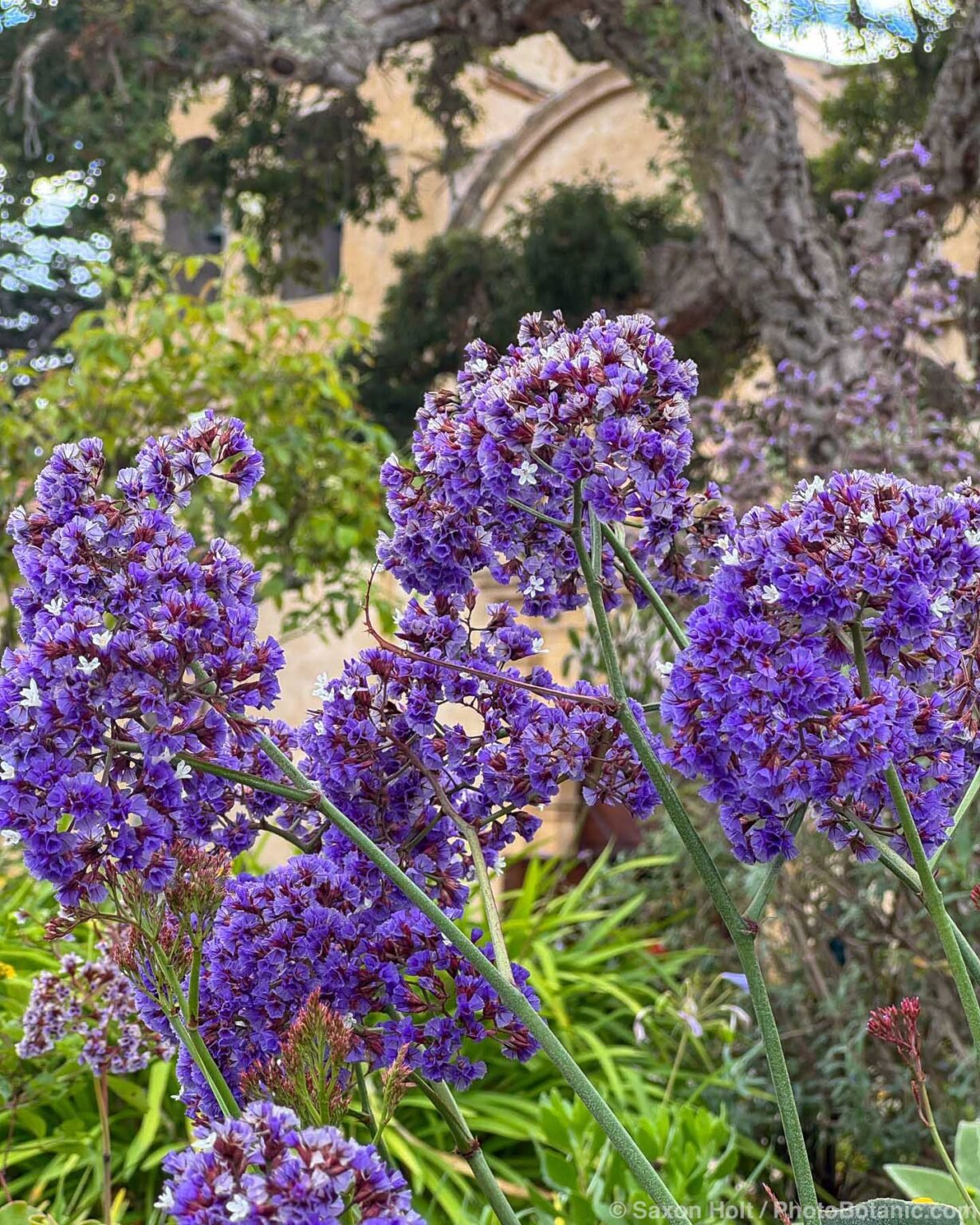
I might have spent a minute or two looking at various compositions through the back of the phone until I found one that allowed the background to complement the composition of flowers. I was particularly pleased that I found the rounded roofline and discovering another smaller Oak in the background that could provide a dark foil to one of the blue flowers.
Studying the scene with the camera is a delightful excuse to slow down and really look at the flower. Grabbing a quickie photo can never remind you of that moment the way studying and composing will do.
Let’s look at another example where a few minutes of looking created a strong photo.
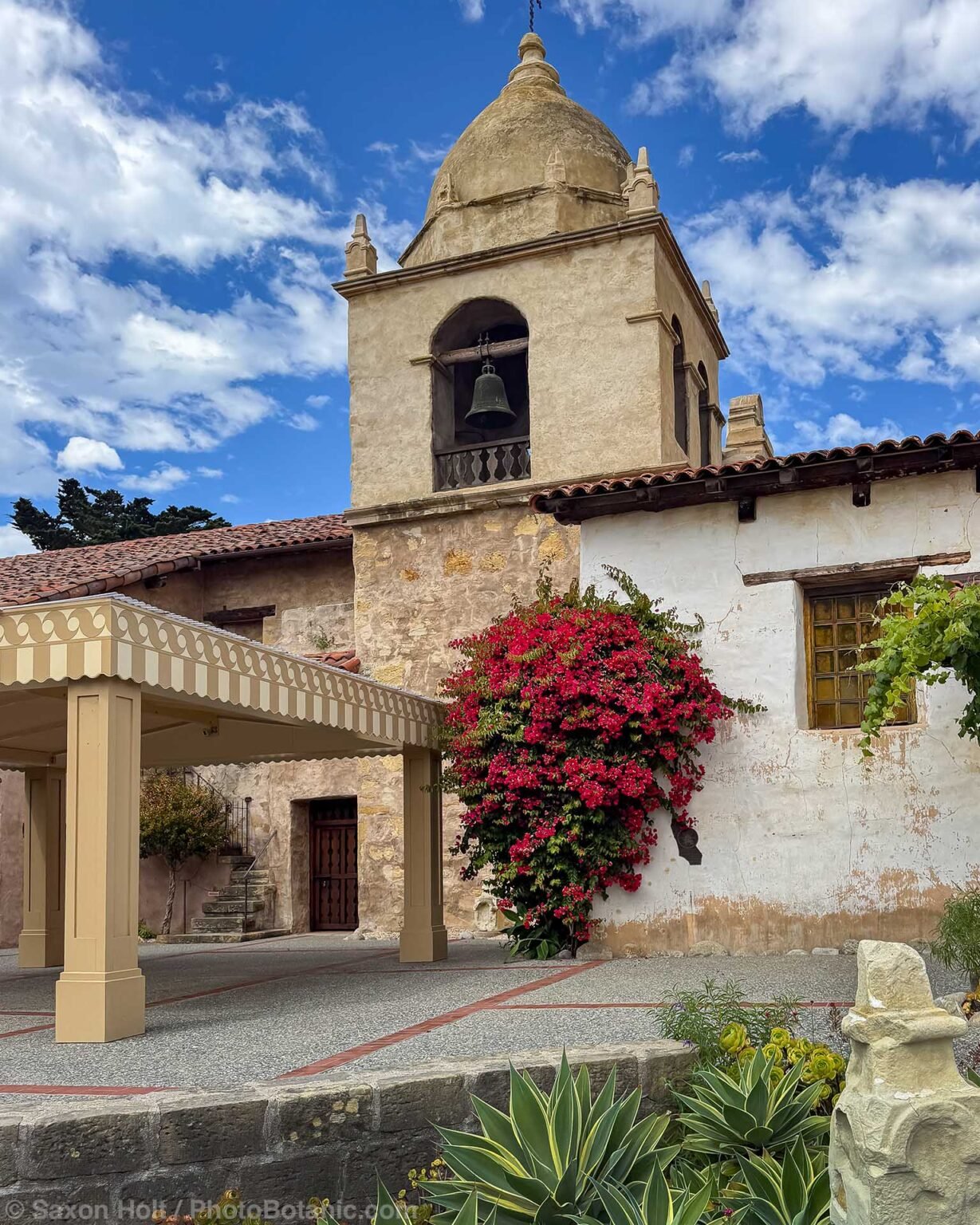
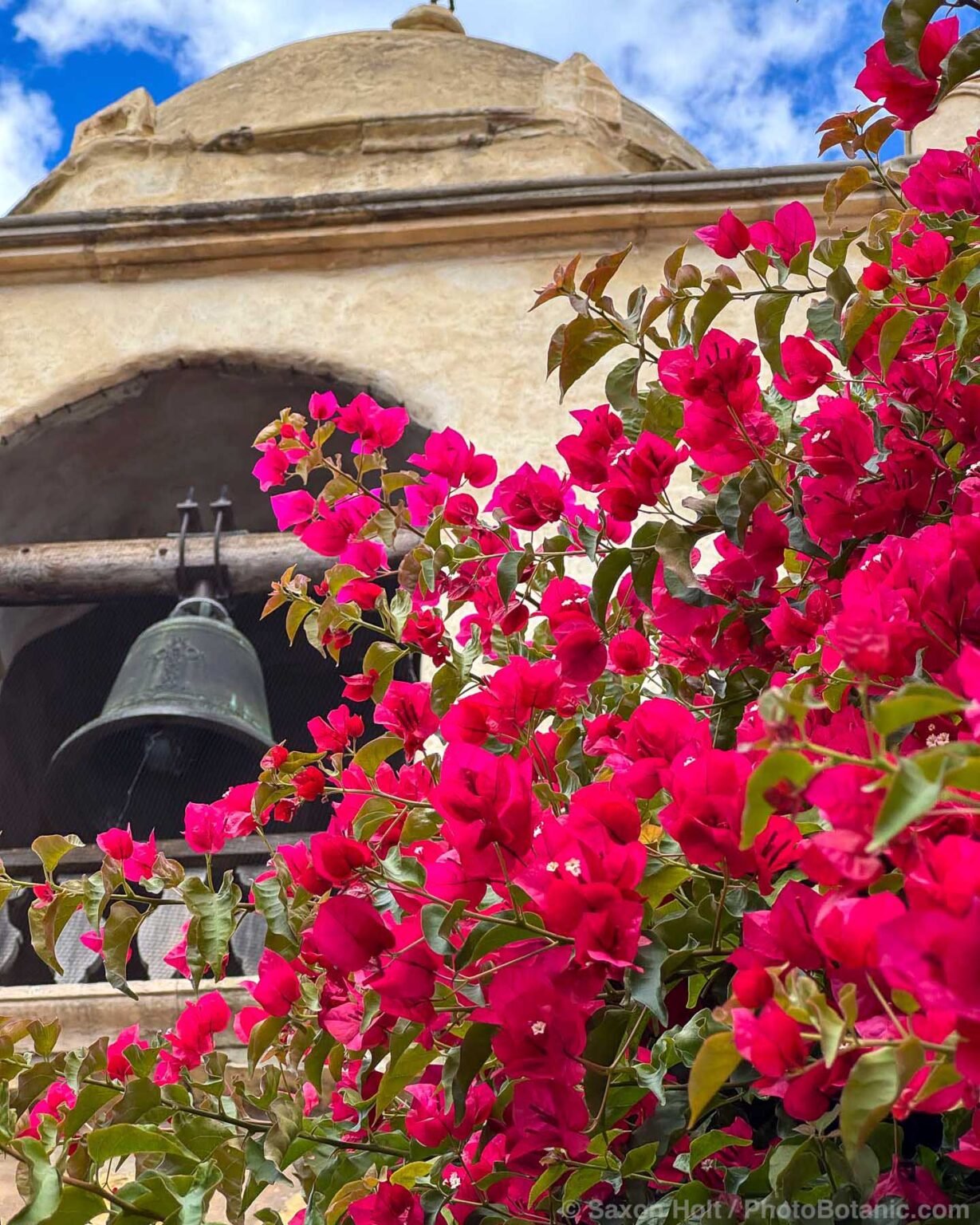
I found a really beautiful Bougainvillea flowering against another side of Mission building just under the iconic bell tower.
Carmel Mission
I pretty quickly realized if I walked right up to the mass of flowers and looked up toward the bell tower, I could likely make an interesting photograph. The hard part, where I might’ve spent two or three minutes, was positioning the flowers in just the right spot in the composition so that I could still see the bell and have the flowers stand out against the sandy color of the building.
Carmel Mission
Two or three minutes of staring at flowers?! The only hard part was that I had a crane my neck.
It is definitely too easy to fall into the trap of thinking a camera phone is not going to give you a good picture and just hastily grabbing the first thing you see. Taking the time, even just a couple minutes, to let the camera define what you are seeing not only leads to a better picture, it allows you a better experience of looking.
About the Series
I began Camera Phones Are Cameras with this full disclosure: I have been a professional garden photographer for 40 years and do not take any of my professional photos with a camera phone. However, almost all the tips I give in my workshops apply to any camera, recognizing the camera is only a tool to capture an image.
It is up to you to take the picture, and if used with intention and consciousness any camera or camera phone can take wonderful pictures; especially if you learn a few techniques.
Read the Full Series Here
Pacific Horticulture Photo Tips Series
We have created a new Landing Page for all of Saxon Holt’s ‘Camera Phones are Cameras’ series of wonderful iPhone tips and tricks.
Every dollar of support goes directly to creatingeducational contentwithin our very lean operation. While much of our team are volunteers, we strive to our editors and staff fairly for their time. This supports ourstrategy to increase the number and impact of climate resilient gardens and landscapes.







Responses