Plastics include a variety of common polymers. They’re found in many garden products including polyethylene sheeting, polyvinyl chloride pipes (also known as PVC), and things containing nylon or polyester fibers like weed fabric, grow bags, and netting. As these plastics degrade into ever smaller pieces, they become microplastics, which are plastic particles between one micrometer and five millimeters long. Although microplastics have been detected in human bodies and seemingly pristine natural areas, the impacts of these tiny particles on our health and the environment are not fully understood.
To further complicate the matter, as plastics degrade, they leach out substances added during the manufacturing process. These additives include Bisphenol A (BPA) and phthalates, which have received much attention in recent years due to their known toxicity to human health.
In this column, we review articles related to microplastics in gardens, including their presence in composts and potting mixes and impacts on soils and plants.
Microplastics in Garden Soils (Hulisz et al. 2025)
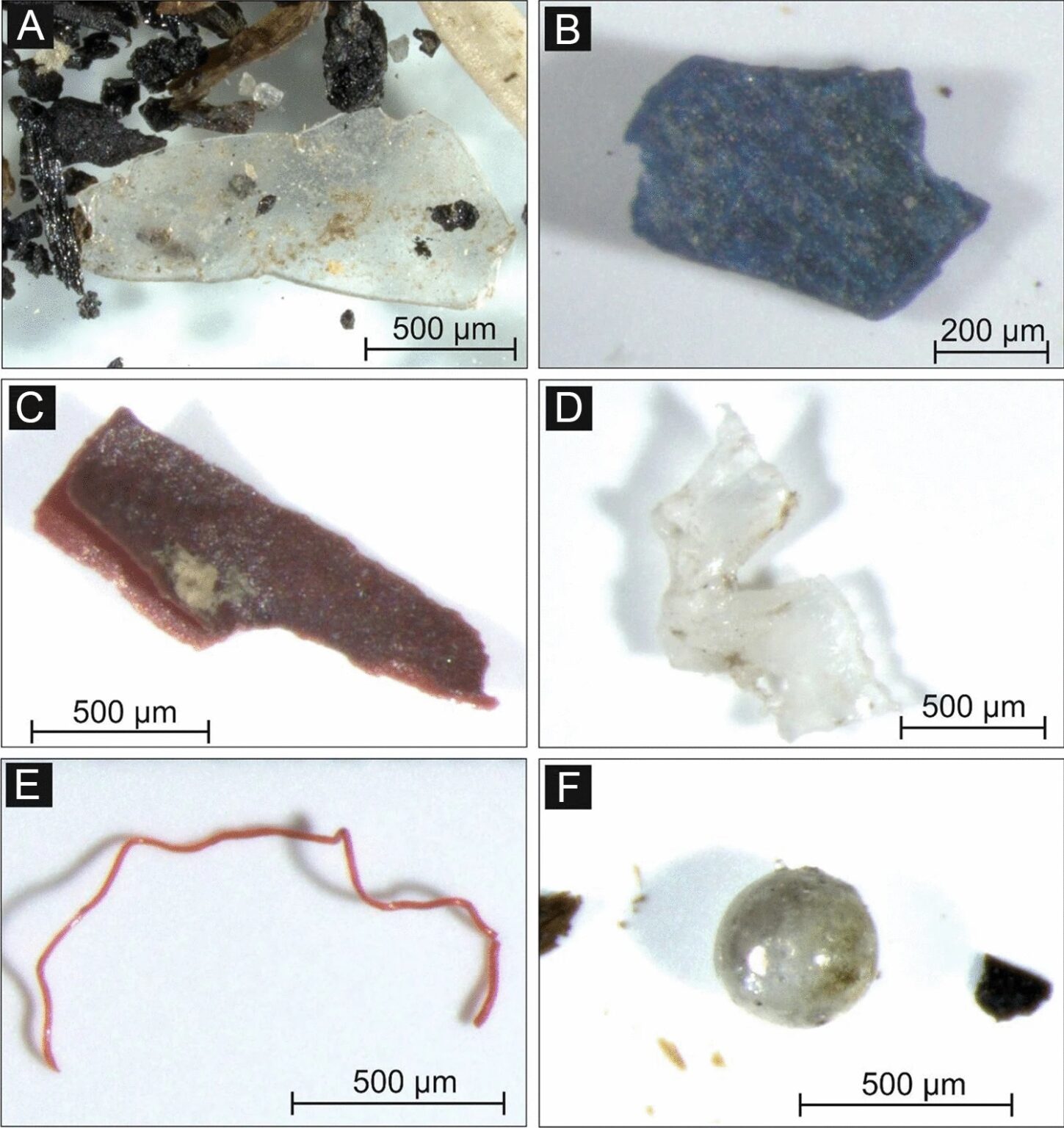
Across all sampled soils they found an average of 112 microplastic pieces per 50 grams of soil. They also observed a wide variety of shapes, sizes, colors, and polymers (Fig. 1). They noted significant relationships between microplastic abundance and soil properties associated with the application of composts (total organic carbon) and other soil amendments, such as calcium carbonate. This suggests that the addition of composts and/or soil amendments may be contributing to microplastic accumulation.
Figure 1. Microscope images of microplastic debris isolated from the studied soils: (A–C) microplastic fragments, (D) film, (E) fiber, (F) sphere. Used with permission from “Microplastic contamination in soils of urban allotment gardens (Toruń, Poland).” (Hulisz et al. 2025)
Creative Commons CC BY 4.0 license
Across all sampled soils they found an average of 112 microplastic pieces per 50 grams of soil. They also observed a wide variety of shapes, sizes, colors, and polymers (Fig. 1). They noted significant relationships between microplastic abundance and soil properties associated with the application of composts (total organic carbon) and other soil amendments, such as calcium carbonate. This suggests that the addition of composts and/or soil amendments may be contributing to microplastic accumulation.
Plastic in Compost (Kaur et al., 2025)
Unfortunately, while research into community gardens showed that composts may be a significant source of microplastics in Poland, there is not yet any published research from North America related to microplastics in composts. However, a research team in Australia recently evaluated plastic in composts and potting mixes.
Kaur et al. (2025) quantified how much plastic is present in these products and estimated how much plastic gardeners may be inadvertently applying when using these products. They sourced seven composts and potting mixes from a major hardware store in Brisbane, in addition to two homemade composts from Brisbane gardeners.
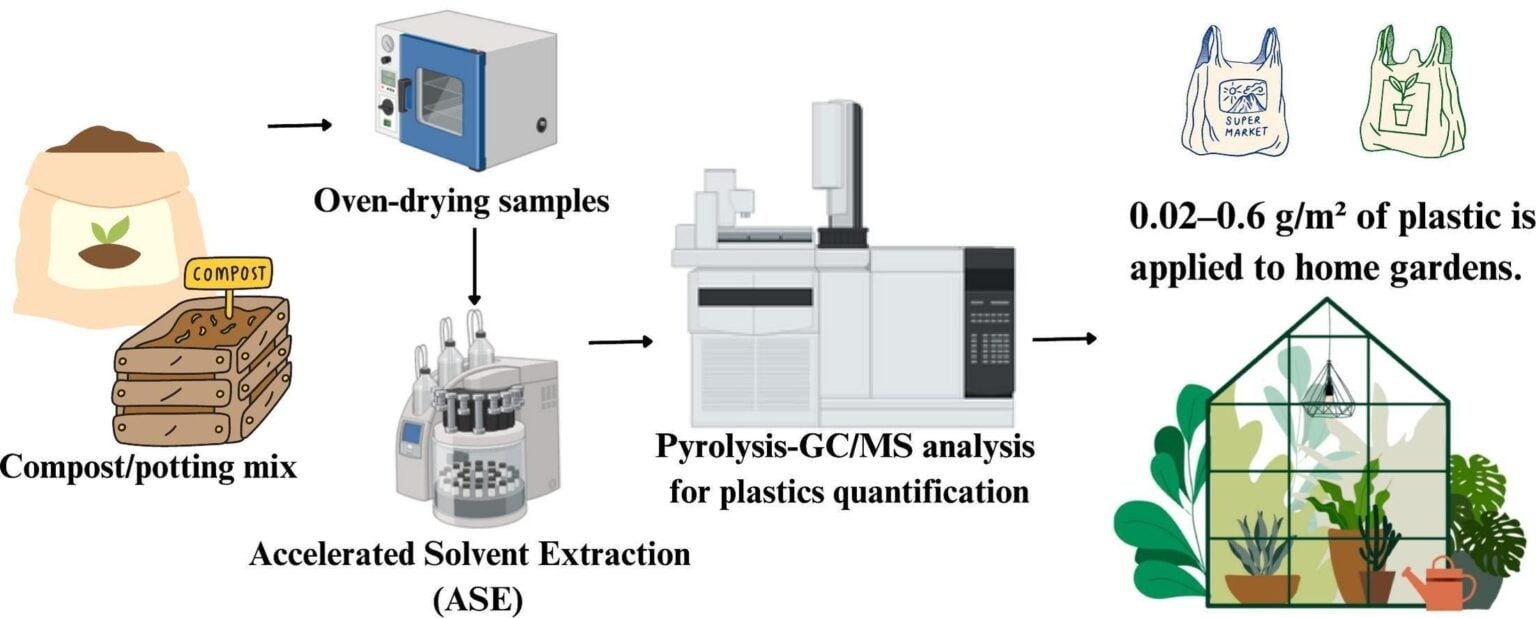
The research team extracted conventional and biodegradable plastics from their samples using solvents. They identified and quantified these plastics via pyrolysis, a technique that involves burning the samples before additional processing known as gas chromatography and mass spectrometry. This allowed researchers to determine the exact composition of the samples—both the polymers present and their respective mass (Fig. 2).
Figure 2. Graphical abstract of “Unearthing the Hidden Plastic in Garden Compost” (Kaur et al. 2025), (Creative Commons CC-BY license)
They found plastics in all categories tested: commercial composts and potting mixes as well as homemade composts. The conventional plastics included polypropylene, polycarbonate, polyethylene terephthalate, and acrylic. Researchers also found several biodegradable plastics, including polylactic acid, polybutylene succinate, and polyhydroxyalkanoates. While the authors also found polyethylene and polyvinyl chloride, they excluded these from final analysis due to potential contamination.
Across all samples, the average concentration of conventional plastics was up to 0.3 milligrams per gram of compost/potting mix. The average concentration for biodegradable plastics was up to 0.49 micrograms per gram of compost/potting mix. Note that 1 milligram is equivalent to 1000 micrograms. Thus, conventional plastics were substantially more abundant than biodegradable plastics in these samples.
Based on typical application rates, these researchers estimate that Australian gardeners could be annually applying as much as 0.6 grams of plastic, per square meter of garden. If we extrapolate to the average size of a typical US garden (600 square feet or 56 square meters), that works out to about 33 grams of plastic added per year. To put that in perspective, that’s the same weight as 33 standard-sized paperclips per garden per year.
This study may have underestimated the amount of plastic, due to the small size of samples used for analyses (1 gram) and the exclusion of two common plastics (polyethylene and polyvinyl chloride). Ultimately, this study suggests that composts and potting mixes are a likely source of microplastics entering gardens and urban landscapes.
Microplastics and Plant-Soil Systems (Lozano et al. 2024)
This study (Nackley et al. 2023) was originally intended to see if aerial drones and computer vision could help identify differences in plant health. The researchers grew three woody plants Red Sunset red maple (Acer rubrum ‘Franksred’), Campfire rose (Rosa ‘Campfire’), and compact burning bush (Euonymus alatus ‘Compactus’). They grew each species with six different fertilizer rates (0, 20, 40, 60, 80, and 100 percent), where the 100 percent treatment represented the manufacturer’s recommended rate.
For their fertilizer, they used controlled release fertilizers (CRF), where fertilizer granules are encapsulated in polymers that slow fertilizer release, based in part on soil temperatures. Temperature-sensitive CRFs are often viewed as an environmentally friendly fertilizer option because they release nutrients in relation to plant growth patterns. For example, fewer nutrients are released in the cooler temperatures of spring, when young plants might be burned by heavy nutrient additions. Compared to unencapsulated fertilizers, CRFs also minimize nitrogen leaching into waterways and volatilization into the atmosphere.
Researchers planted rooted cuttings on April 6, 2021, at Oregon State University’s North Willamette Research and Extension Center in Aurora, Oregon. The researchers initiated fertilization treatments on May 4.
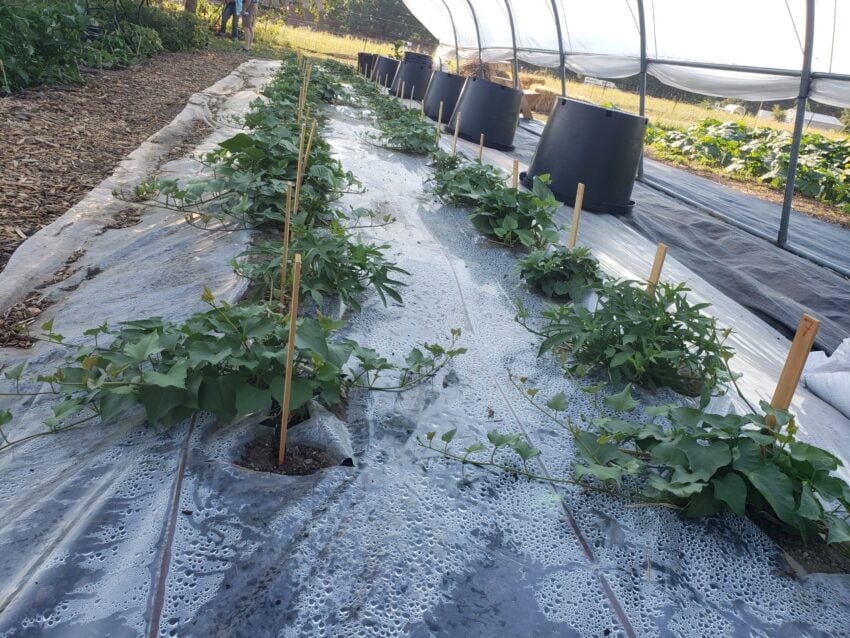
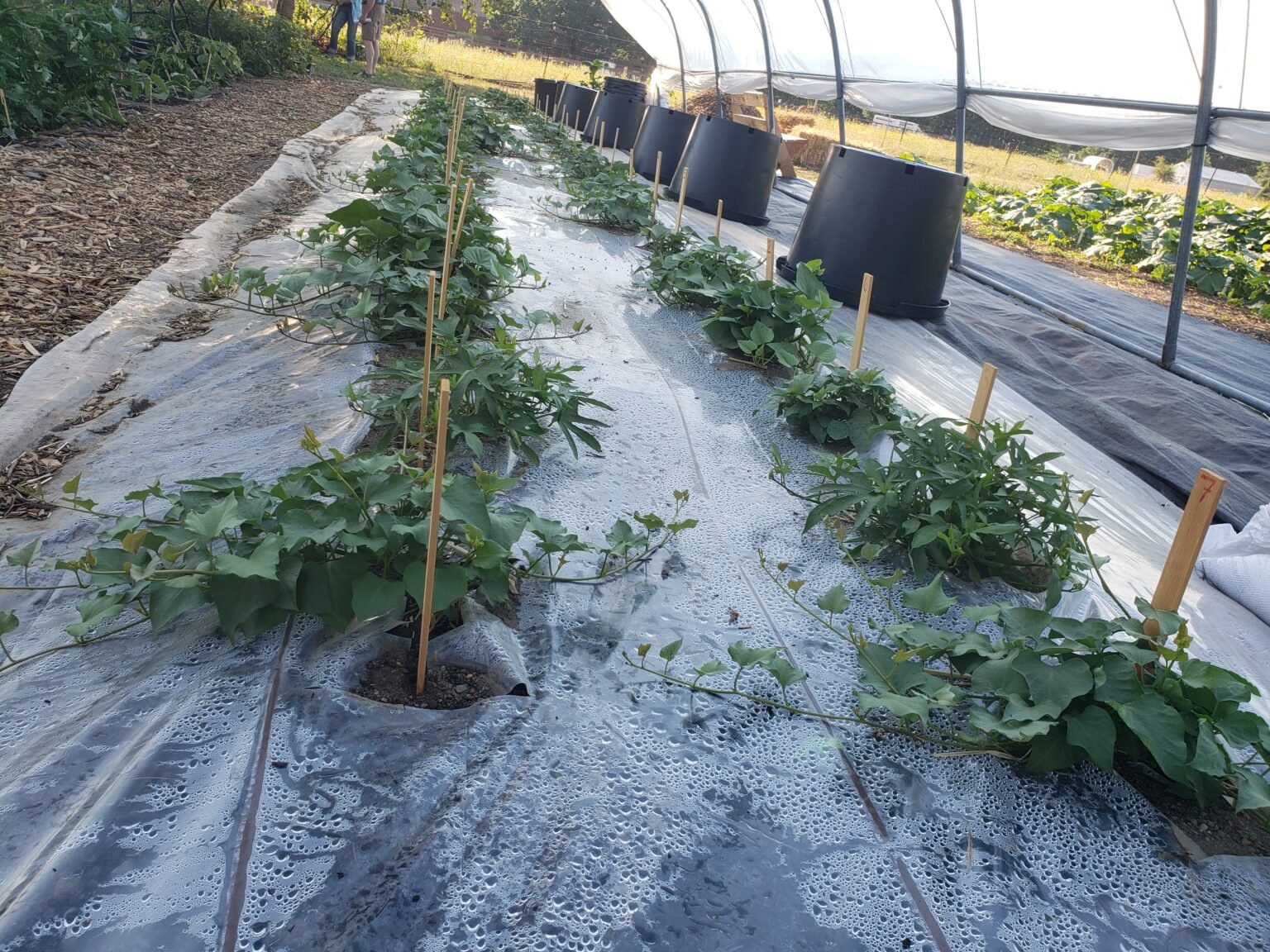
Figure 3. Sweet potatoes growing with clear plastic film mulch. Credit: Gail Langellotto
If we now know that microplastics are in garden soils and composts, Lazano et al. (2024) set out to determine what this means for our soils and garden-grown plants. They used clear polyethylene film (Fig. 3) and black polypropylene film, both commonly used as mulch.
Because these researchers aimed to parse out the effects of plastic particles and plastic additives on soils and plants, they created six experimental groups. First, they spiked some soils with just particles, some with just additives, and some with both particles and additives (three microplastic treatments in total). Next, they planted half of all treatments with Queen Anne’s lace (Daucus carota ssp. carota) and left the other half unplanted. This experimental setup allowed them to assess the independent and interactive impacts of microplastics and plants on soil properties.
At the end of this experiment, the researchers were faced with complex, seemingly confounding, results. Microplastic particles alone had a positive effect on several soil properties, including soil aeration, bulk density, and porosity. They also found that additives had negative effects on other soil properties, including respiration and aggregation. These negative effects were likely due to the toxicity of the additives.
The presence of plants appeared to mask these negative effects, potentially because the plants were able to exploit the microplastic-improved soil aeration and porosity, allowing for greater root penetration and nutrient uptake. Plants grown in the soil spiked with microplastic particles had increased biomass. Additionally, in the planted soils, soil aggregation improved even with additives. This may be due to nutrient-rich root exudates—secretions—that improve soil aggregation both directly due to their “stickiness” and indirectly by feeding soil microbes.
This research highlights how incredibly difficult it is to generalize the impacts of microplastics on soil and plants. Even in this study, which only used one soil type, two polymer types, and one plant, the results are complex.
My Master of Science research in the Garden Ecology Lab will focus on disentangling the impacts and sources of microplastic contamination on our landscapes. In the meantime, gardeners who wish to minimize microplastics in their soils might consider making their own compost (taking care to avoid plastic in the process) and using alternatives for plastic mulch, such as organic mulches or living mulches.
Read the Last Lab Report Next:
Lab Report: Climate Change in the Garden
By: Dr. Gail Langellotto
In the Pacific Northwest, natural cycles of El Niño (warmer years) are followed by a La Niña period (cooler years), resulting in fairly large swings in regional climates. Coupled with the fact that the Pacific Northwest has experienced comparatively modest temperature increases of 1.5 °F (0.8 °C) over the last century, it can be difficult to disentangle human-mediated shifts in plant phenology from natural climate cycles. >>Read Now
Read the Entire 'Lab Report' Catalog
We have collected all of our published ‘Lab Reports’ from over the years into their own category. Check them out today to see how science has shaped our understanding of the Horticultural World we live in! >>Lab Report Archives












Responses