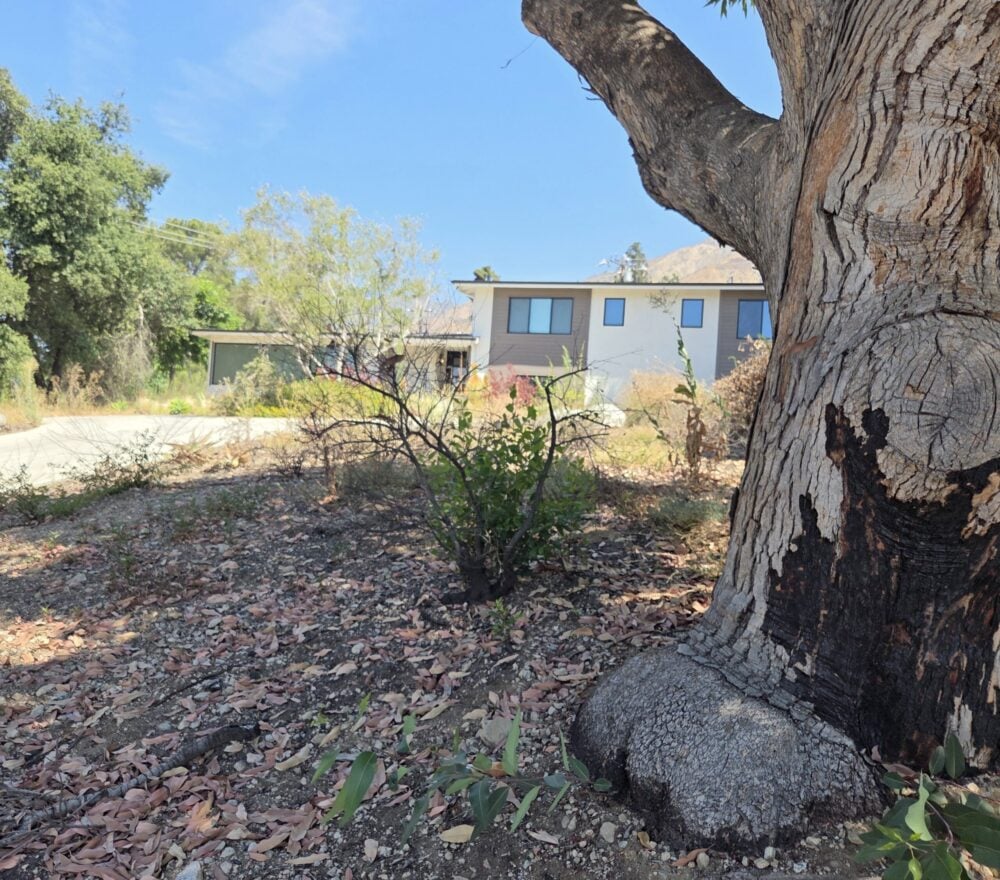
Header image: Altadena Survivor with burnt Eucalyptus, resistant landscape and good architecture. All Photos by: Douglas Kent, MS, MLA
Winter 2026
In fire country, plants with similar water needs should be grown together for bigger reasons than water conservation. We are cultivating relationships with our plants, getting to know them better, adjusting for their needs, growing them similarly to plant communities, albeit man-made. These water-driven relationships are essential to balancing water dynamics in fire country. Hydrozones become communities, plants are neighbors, and stately trees can be guardians. Regardless of species, a healthy, well-hydrated plant is less easily ignited than one that is dehydrated, stressed, or both.
The goal of supplemental water is to bridge the gap between what Mother Nature provides and what our plants need in order to stay healthy. Every member of the team must be taken care of. We need to supplement the water that rainfall does not naturally provide, whether this supplemental water is needed because the plants we grow need more than that region receives annually, or because it has been a drier-than-normal rainy season and annual totals won’t be sufficient to last through the rest of the year.
In return for intelligent irrigation, we keep the life in the soil healthy, we encourage plants to root more deeply, and we make sure the plants can defend themselves in a firestorm. Our relationship with land impacts the health of all, ourselves included.
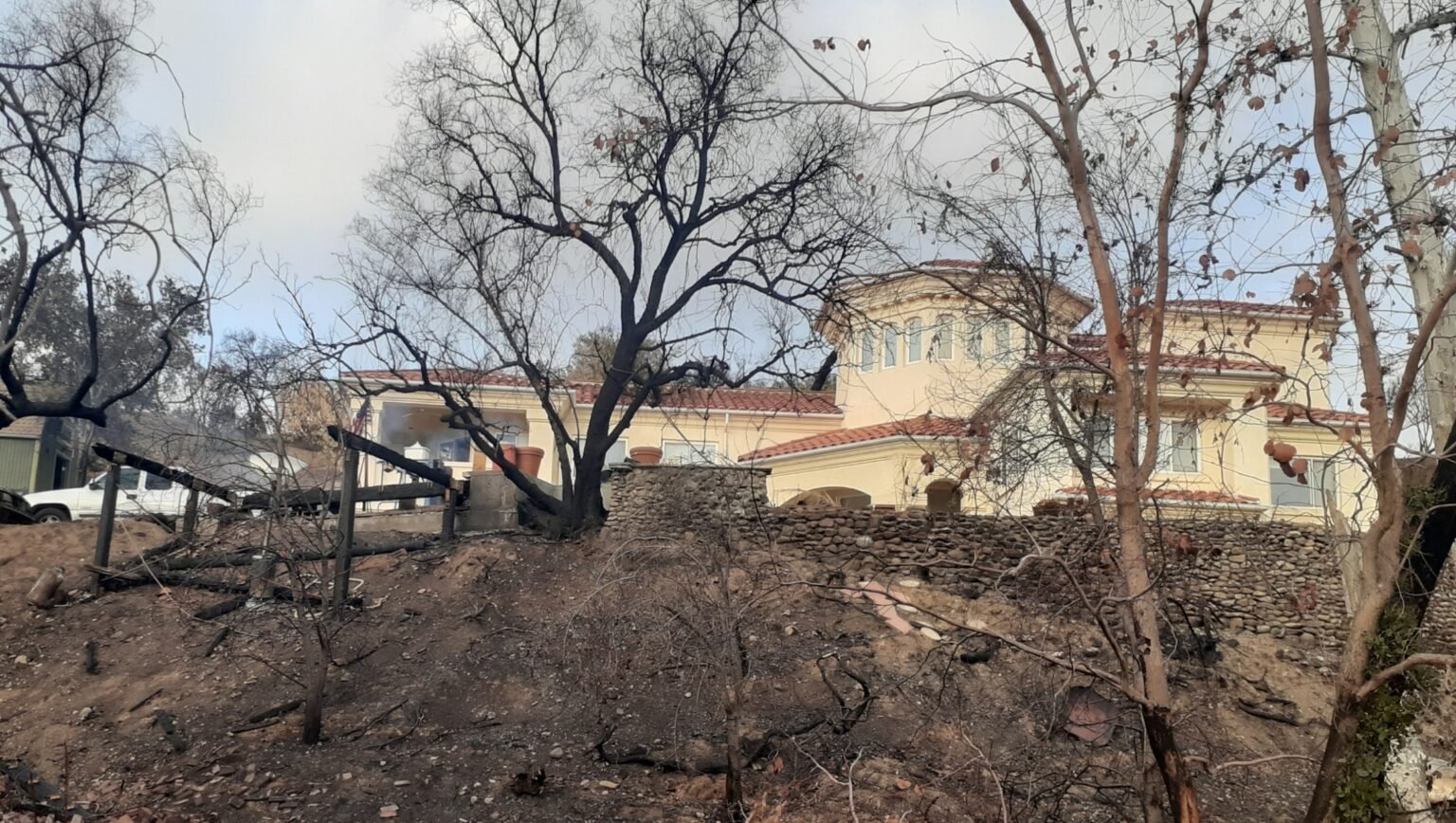
Water-stressed and burnt oak, sycamore, and lemonade berry in foothills of Santa Ana Mountains after the 2020 Bond Fire. When healthy, all these plants are fire resistant. Plant care is far more important than type of plant.
A plant that is hydrated and healthy with a robust, healthy root system can withstand searing heat and dry winds far better than one that is drought-stressed or otherwise struggling. Caring for our plants with informed irrigation can help support them in building their own resilience so that they can face heatwaves, drying winds, and the pressures of a fire event, but that doesn’t happen overnight, nor in a season. We must be training our root systems for this from the time that they’re first planted and then nurture that resilience through care and attention throughout their lives. We offer our attention and time to a long-term partnership with the needs of our plants.
Watering priorities
Protect the elders of a landscape and they will protect the ecology of the site, which includes environmental health and structures, but also you and your family. Mature vegetation is valuable. For one thing, properties with mature vegetation sell for more than comparable properties, including those with new plantings. However, the full value extends far beyond the financial.
Mature vegetation, such as trees and long-lived shrubs, hold and build rich soils, support a diversity of wildlife, and can make outdoor environments more inviting and livable. Whole neighborhoods benefit from healthy landscapes when we take the time to care for them.
An inviting, soothing, and comfortable landscape will include mature vegetation, richly shown in this scene from Altadena, California.
Yet if we choose to neglect the elders for the splashier annuals, biennials, and perennials, we risk something far greater than loss of these landscape elders. Because of their mass and stature, poorly maintained mature vegetation can become a combustible liability in a firestorm. Dehydrated and stressed trees and shrubs burn at greater temperatures, produce more firebrands, and—because of their size—create more danger for landscapes and structures downwind when afire. They also burn longer than lighter fare like dry grasses and perennials because they have so much more biomass and woody tissues.
We recommend prioritizing the health of the long-lived, large, foundational vegetation like these “elder” trees and shrubs. Smaller plant material underneath and around them must be compatible with the care that these large plants receive including irrigation scheduling. To ensure the health and prosperity of mature vegetation, you must determine the plants’ watering goals. Change the conditions around an “elder” and you risk stressing it and potentially losing it down the line. The damage may not be immediately apparent and could take years to be recognized.
In Defense of Large Trees
Large trees are essential for our quality of life in urban and suburban neighborhoods. Yet after every fire, there is a chorus of complaints against large vegetation, sometimes loud enough to reduce canopy cover. Urban trees bring an extensive list of environmental benefits that we sometimes take for granted.
The shade from healthy mature urban trees in the built environment mitigate the heat island effect. This keeps both indoor and outdoor temperatures cooler in warm weather and reduces the need for air conditioning. The shade from living trees is more effective than the shade of a non-living structure thanks to the cooling effects of evapotranspiration.
Trees protect both people and wildlife from environmental conditions that endanger health. Cleaning the air we breathe, they consume atmospheric oxides, such as carbon monoxide and nitrogen oxides, both precursors to ozone and smog. Lowering the concentration of these gases defends respiratory health for people and wildlife. They provide this service often over longer life-spans and using more biomass than smaller plants have.
Their shade also reduces our need to replace or repair furnishings and decks and also slows down the need to repair the cracks and potholes resulting from temperature swings and the “shrink swell” effect. When heated and cooled with unshaded extremes, paving tends to break apart faster and need replacing or repair more often. We save both financially and by using less energy and labor. Additionally, we conserve environmental resources by needing fewer materials for these repairs and sending less discarded material to the dump in the process.
Healthy trees also protect properties from wind-driven heat. During fire events, they lower local wind speeds, cool the air, and screen windblown embers. The pre-heating and drying effect of hot air during a fire event is part of how landscapes are made more easily ignited. Plants are warmed up and dried out in advance of the flame front. Those healthy root systems we are irrigating to develop are critical in these moments.
Trees are a natural resource both during and after their long lifespans. They provide food and shelter to a diverse array of wildlife, whether animals, insects, or other plants. Even a downed tree can be important habitat for lots of living things, providing as it decays. Groups of trees provide better than isolated individuals and support each other as well. They enrich our lives with their bounty and can provide decoration, food, medicine, textiles, and timber.
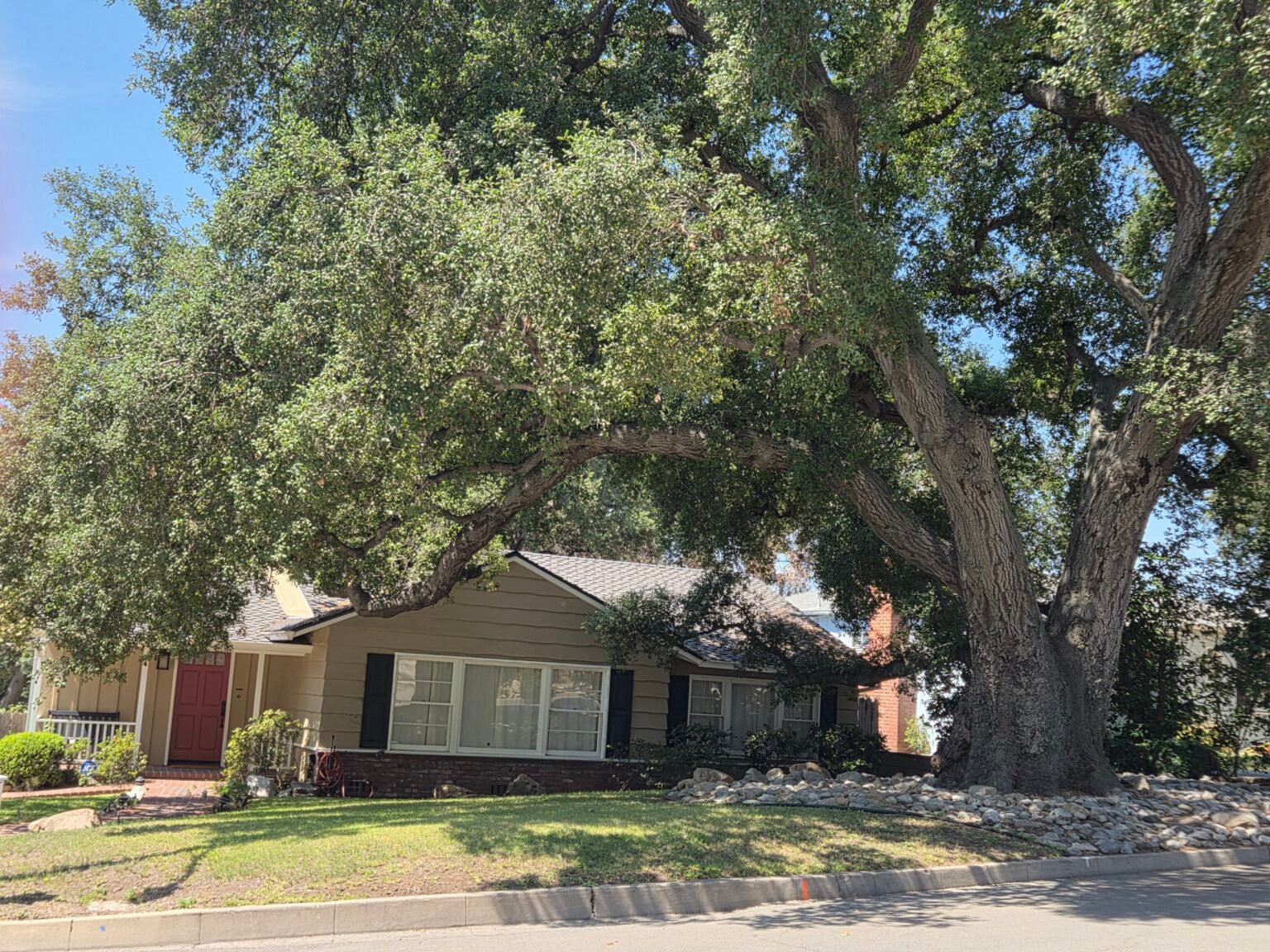
A warrior-like oak (Quercus sp.), diligent architectural maintenance, and compassionate land care enabled this house to survive the Eaton Fire.
Season of need
Like us, plants have periods of intense activity and need, and then periods of rest and restoration. Both cycles are essential for a healthy and long life. Plants evolved to rhythms and are at their best when within their historic tempos. A good garden will honor periods of growth and rest.
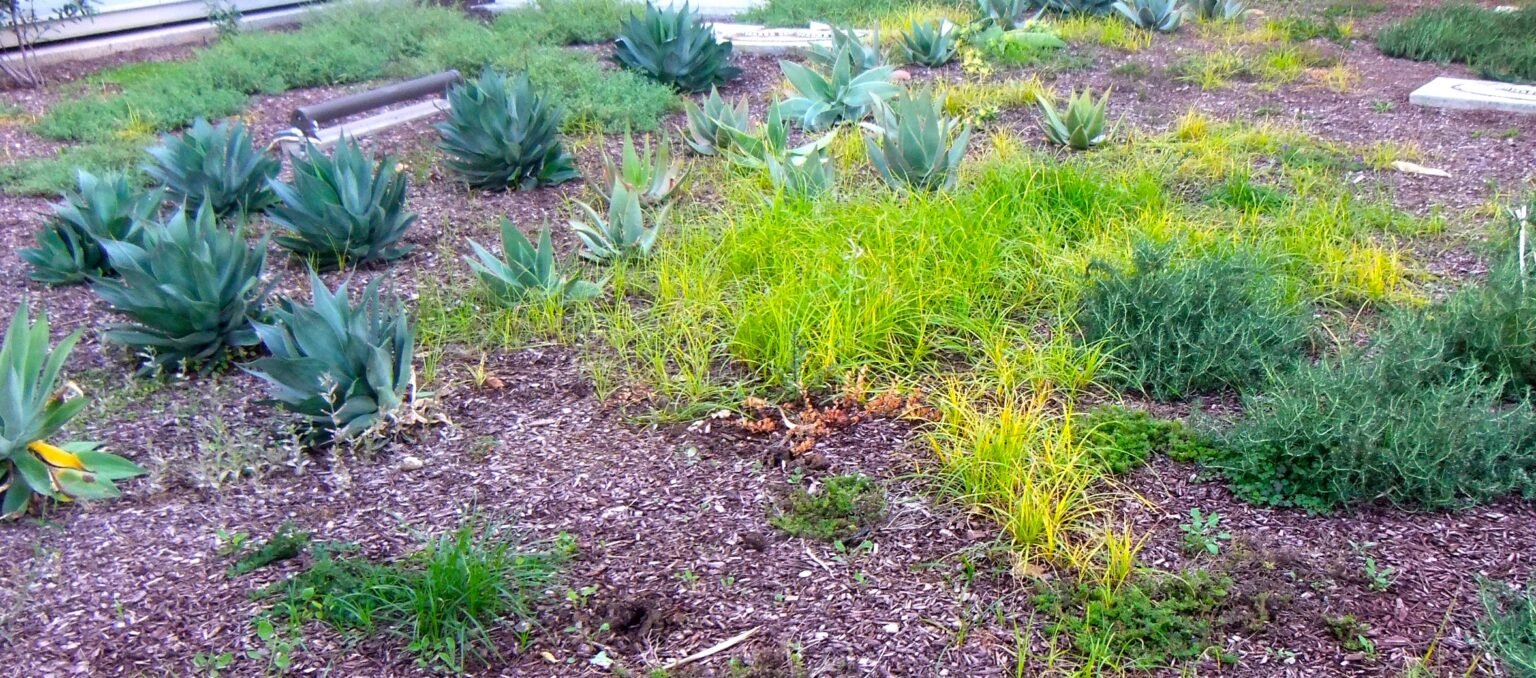
Weeds are often a good indicator of soil conditions. Pictured is a newly installed garden that is overwatered. Yellow nutsedge (Cyperus esculentus) prefers acidic and moist soils, whereas agave (Agave) and rosemary (Salvia rosmarinus) prefer neutral pH and sporadic moisture. Agave is prone to mealybug, rot, and scale in moist conditions.
Matching watering schedules with the rainy seasons of a plant’s evolutionary history will bolster that plant’s health throughout the year. For example, a plant that is native to a desert that has monsoon seasons would be adapted to inundation but also long dry spells. Understanding that this plant has evolved for these conditions can inform how you water it and help troubleshoot any problems. This hypothetical plant may resent regular watering year-round, and if it appears stressed, you may want to look at whether the irrigation being provided is in alignment with its needs.
Many garden plants are in use today because they’re more forgiving of a wider range of conditions, including watering schedules. They’ve been adopted by gardeners because they succeed and will share a garden that may be different from where they’re from, not to mention they may benefit from breeding that encourages disease resistance and drought tolerance.
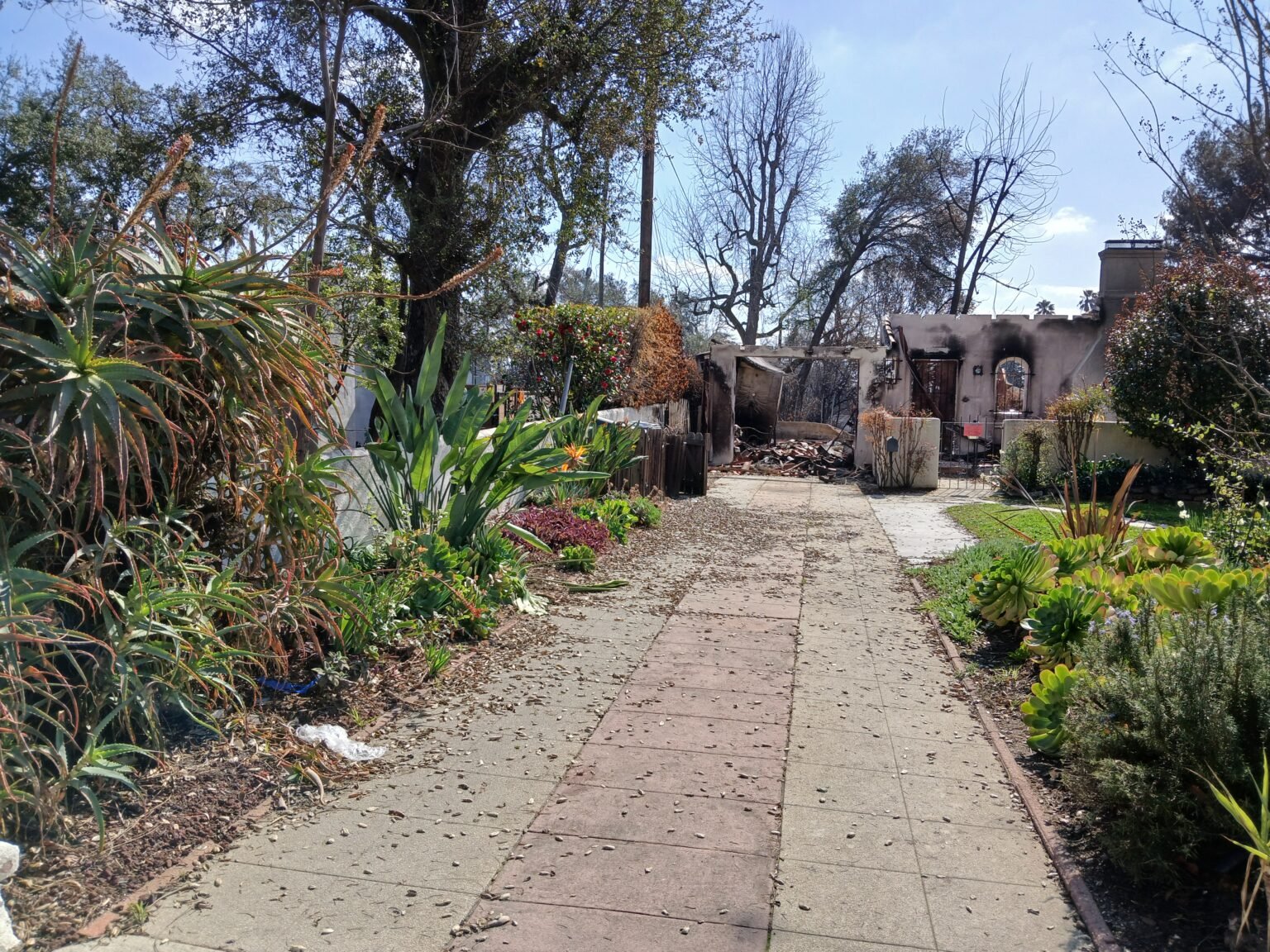
Irrigated, pruned, and cared for, this subtropical plant palette in Altadena, California, shows little sign of the fiery maelstrom that raged around it.
Deep and infrequent
Deep and infrequent irrigation schedules have been bandied for decades, and there is much to the clamor. Deep and infrequent watering supports healthier soils and more resilient plants than if they received more frequent but shallower watering.
There are two parts to this irrigation regime. How deeply to water is determined on a per-plant basis. What is deep for a violet would not be sufficiently deep for an Oak tree. The goal is to fully hydrate soil to a prescribed depth depending on the plant. Infrequent water means only irrigating once soil has dried to the watering depth. Soil drying rates vary widely depending on season, weather, drainage, soil type, organic matter, and whether or not it is mulched. Irrigation needs will be as variable as the drying soil—they are site-specific and can even vary within a site.
Deep and infrequent irrigation schedules have two beneficial impacts.
First, this moves salts through the soil column, which prevents them from accumulating and causing harm. Accumulated salts alter acidity, reduce nutrient availability, and pull moisture from plants, all of which leads to chlorosis, leaf burn, and growth restricted to outer limbs. Accumulated salts are not uncommon in urban areas, and not all chlorosis signals iron deficiency.
Second, these schedules help a soil’s gas exchange, known as soil respiration. Carbon is expelled by roots and microorganisms and as the pressure of water flows downward, it pushes the gases out of their spaces and upward through the soil. Conversely, as the cavities between soil particles dry out, they pull new air and oxygen back in. Most urban soils and plants thrive with this movement of gases.
The challenge of this irrigation regime is twofold. Ensuring deep hydration may require a lot of water; a low-flow irrigation system might need to be run for hours to get to meaningful depths. It also takes vigilance to check soil moisture, and patience to wait for the soil to dry. Soil probes help the process of checking moisture, but even these don’t go very deep. Compacted soil makes this process even more difficult with these important spaces having been squished down or eliminated.
Dry to depths
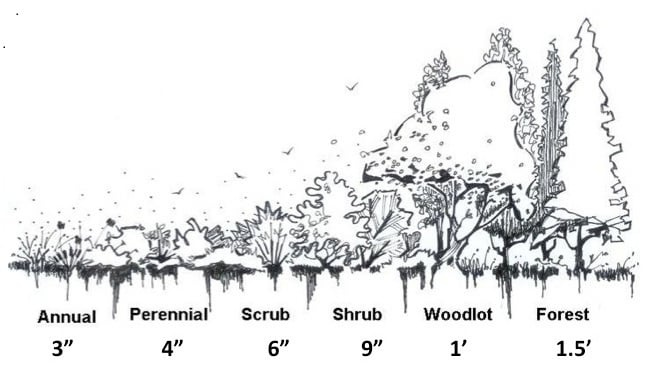
If deep and infrequent irrigation is key to developing robust root systems, how deep should that water go? The answer depends on the needs of each plant—or group of plants with similar water needs planted together, also known as a hydrozone. There are many resources that provide information on proper hydration, but few that provide information on dry to depths. A dry to depth is the predetermined depth where the soil should be dry before deeply irrigating again. The illustration below provides a generalized approach to deep irrigation.
Dry to depths can become part of deciding irrigation schedules. With mixed plantings, however, it can get complicated. You would not want to allow the soil under a small or shallow-rooted plant to dry out all the way down to large tree depths because that could introduce drought stress needlessly for those shallower rooted plants. Conversely, keeping water in the top few inches can encourage shallow rooting for large plants like trees and shrubs. Using dry to depths effectively ensures a period of drying between watering which encourages soil respiration which was discussed above, but it needs to come with thoughtful planting and irrigation design.
Dry to depths are a handy approach to irrigation. A plant or hydrozone is only watered once it has dried to a desired depth. And once dry, it is then replenished with moisture at that same depth.
Identifying water stress
Nearly every plant needs water at some point, and without it the plant will show visible signs of distress. A lack of water not only shuts down a plant’s essential functions, like photosynthesis, gas exchange, and rigidity, but also slows biological activity in soil—decreasing levels of nutrients, increasing levels of salts, and reducing the soil’s ability to physically hold the moisture it does get.
Unfortunately, the symptoms of water deprivation can look like other problems. Overwatering, too much heat, freezing temperatures, nutrient deficiencies, underground damage from animals (i.e. gophers), and even old age can also look a lot like dehydration. The surest way to identify water stress is to observe signs and physically check soil moisture.
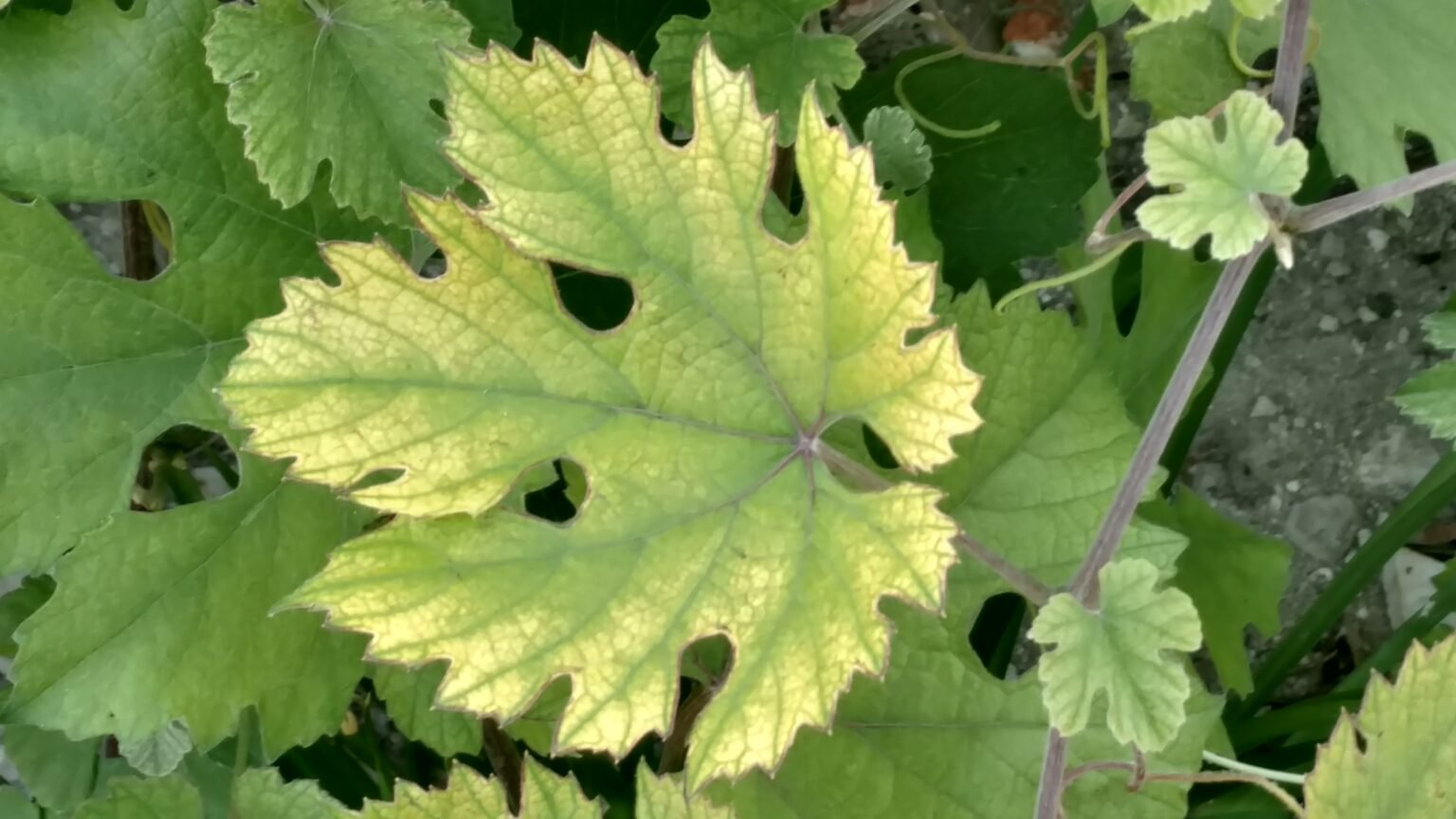
Many urban landscapes are irrigated with reclaimed water, which is high in salt. If those salts are not moved through the soil, they accumulate, making the soil more alkaline, which reduces the availability of iron, leading to the chlorosis seen here. Grapes (Vitis spp.) thrive with deep and infrequent irrigation.
Signs of water stress
While checking soil moisture, keep an eye out for visible signs on the plant itself. Look for wilting and drooping flowers, leaves, or stems, though woody stems may not wilt. Leaves may be brittle (not limp), or they may be dull, bluish, or chlorotic. The plant may shed older leaves or drop leaves extensively or unseasonably. The leaf edges may show burns or crinkling. Additionally, the plant’s new growth may be stunted.
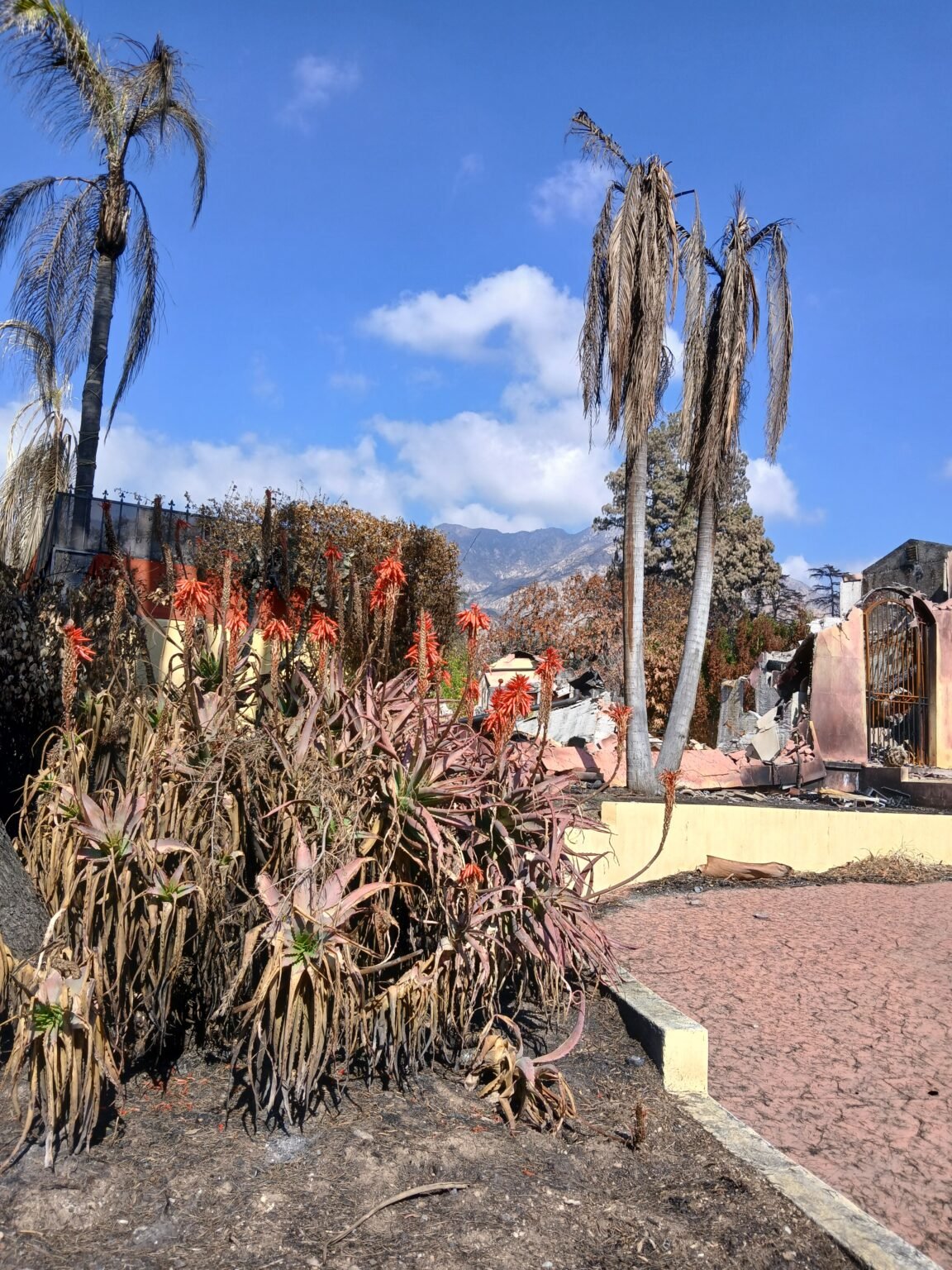
This patch of coral aloe (Aloe striata) shows the signs of under-watering with shriveled leaves, dying older leaves, and stunted new growth.
Remedies
If you believe a plant is stressed from water deficiency, identify the plant’s season of need and ensure appropriate moisture. Assuming that your plant doesn’t require dry summers, you can recharge the soil with irrigation to the plant’s prescribed watering depth. The irrigation schedule should be recalibrated so that the water goes deep enough and dries out appropriately between cycles. Finally, apply a mature compost to increase the soil’s water-holding capacity and apply mulch on top of the soil to reduce evaporation and keep soil temperatures even.
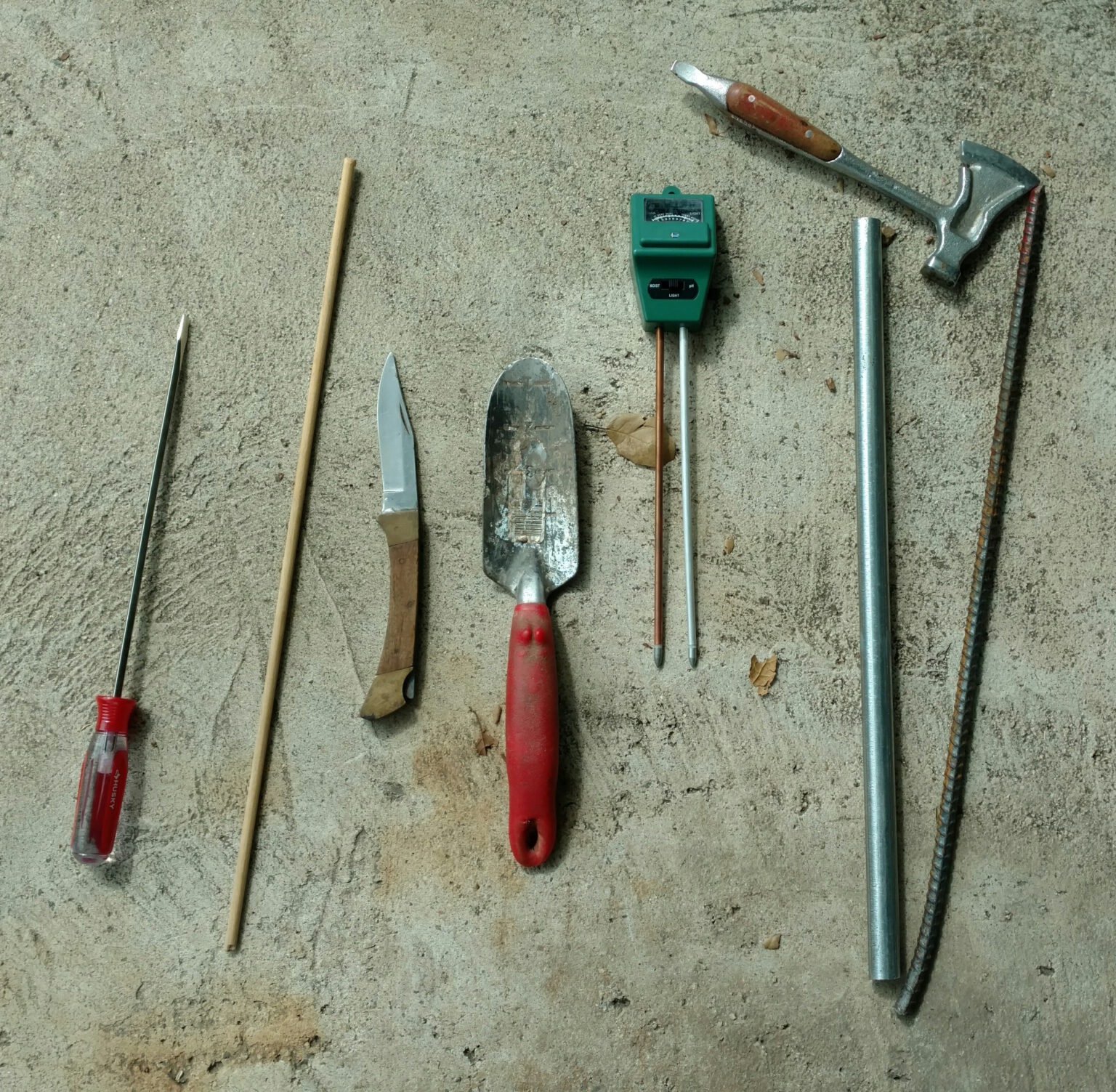
All these instruments can be used to gauge soil moisture: a long screwdriver, wooden dowel, knife, hand trowel, moisture meter, and a thin-walled pipe with hammer and rebar (to knock the soil core out).
We should acknowledge that summer dormancy is normal for some plants, even if it is not the normal dormancy season for others. Additionally, California native lowland cool-season growers, such as live oak (Quercus spp.), somesages (Salvia spp.), and sumac (Rhus spp.), demonstrate a preference for dry summers. They need little, if any, summer water and plenty of rest to live a long, healthy, and low-flammability life.
Supplemental irrigation for these should only be offered if the rainy season didn’t provide enough water that year. These plants rely on the rainy season to store up reserves to get through the coming dry season. For these plants, start irrigating in the fall if the rain is late, or irrigate during the winter and into spring if the rain seems to be stopping early or totals are unseasonably low. We are then mimicking what those plants were naturally adapted for, rather than giving them “rainfall” in the off season, which for them would be detrimental.
Irrigating for excessive heat and red flag days
If you’ve ever been to the beach on a hot day and dug your toes into the sand, you may have noticed that it can be hot as Hades on top, but cool and even damp a few inches down, then cooler and more damp the deeper you go. The same holds true in the garden and the roots of your plants benefit from being able to pull moisture up. A gardener strives to create those same comforting conditions for roots, and to encourage roots to grow deep to those places where water is available longer.
We usually get a week or more of advance notice of heatwaves and katabatic winds, and we need all that time to properly prepare the garden.
The goal of irrigation for most gardens is to fully hydrate the soil without hurting the plant by suffocating root systems that are not adapted for inundation. This means irrigating to the dry to depth and letting the first one or two inches of the soil dry. Having the top of the soil dry during extreme heat is vital. Dry soil does not store solar radiation (heat) like wet soil does, which helps reduce nighttime temperatures. Dry topsoil with cool and moist subsoil reduces incidence of disease, such as crown rot, leaf spot, and powdery mildew.
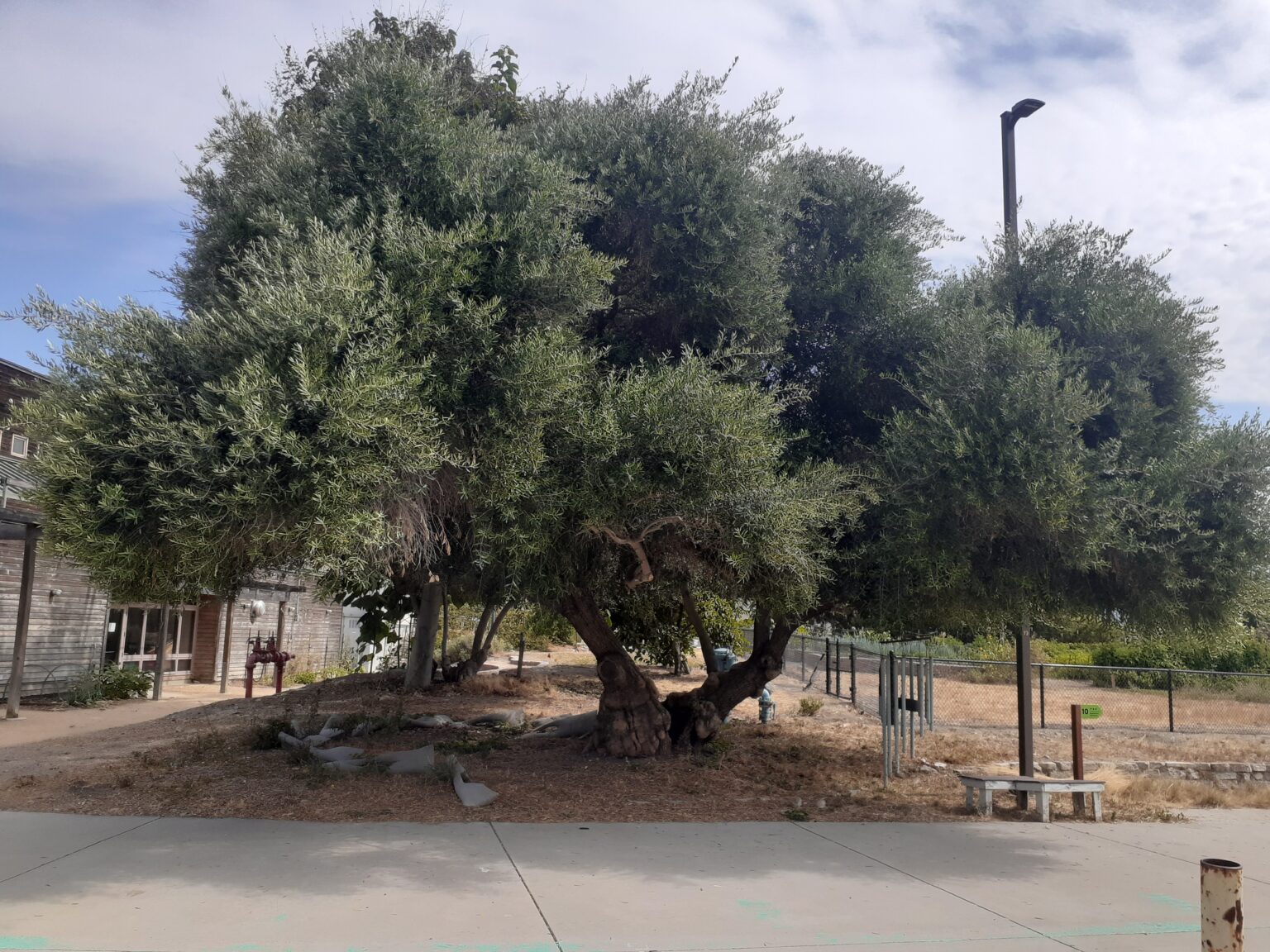
Olive trees (Olea europaea) are prone to root rot in moist soil but still require a deep source of hydration to support their growth and offspring. Deep and infrequent irrigation favors these fire-resistant trees.
Properly hydrating vulnerable or drought stressed plants requires forethought. Their tissues need to rehydrate, and getting new water to move through hydrophobic or compacted soil to reach the root system takes time. A plant’s ability to move water through its vascular system can take hours or days. Shrubs hydrate faster than tall trees and broadleaved plants are faster at this than conifers. So—between irrigating, allowing plants to move water through the xylem, and letting the top few inches of soil to dry—take action as soon as extreme heat and katabatic conditions are forecasted. Do not wait until the last minute, we must keep them ready to face hot weather and other stressful events.
The best time of day to irrigate varies with location. Landscapes along the coast should be irrigated early morning to reduce chances of mildew and rot. Landscapes in the drier foothills, mountains, and deserts should be irrigated mid-evening to minimize water loss to evaporation during the day and allow plants as much time as possible to take up the water. Also, try to have the irrigation go on when someone is around to observe. Broken irrigation or overspray will persist and deprive your garden of even watering if no one is around to notice.
Winter water
January 2025. The Eaton and Palisades fires tore through thousands of residential properties in Southern California. January is usually the wettest month of the year on the West Coast. But that January, Southern California had been buffeted by several weeks of katabatic (also known as Diablo or Santa Ana) winds prior to the fires. Everything was parched. Few gardeners were prepared.
Unprepared gardeners and dry landscapes are not unique to Los Angeles. Fires have roared through winter-dry urban landscapes in Santa Barbara, Paradise, even Oregon. Some of the plant communities in these areas are adapted to dry conditions, but January is when they need and expect the water to be present.
Water stress is common in winter, maybe more so than any other part of the year. Nearly every plant needs moisture in winter, yet most gardeners expect the weather to provide hydration and leave it at that. That’s okay in the wildlands, but not where public health is prioritized.
Water stress not only makes a plant more susceptible to ignition, but also dieback and pests. Gardeners should ensure that moisture is available and keep an eye on the weather. Gardeners who shut off the irrigation based on the calendar without regard to the forecast do their gardens a disservice. Care for plants and they will care for you.
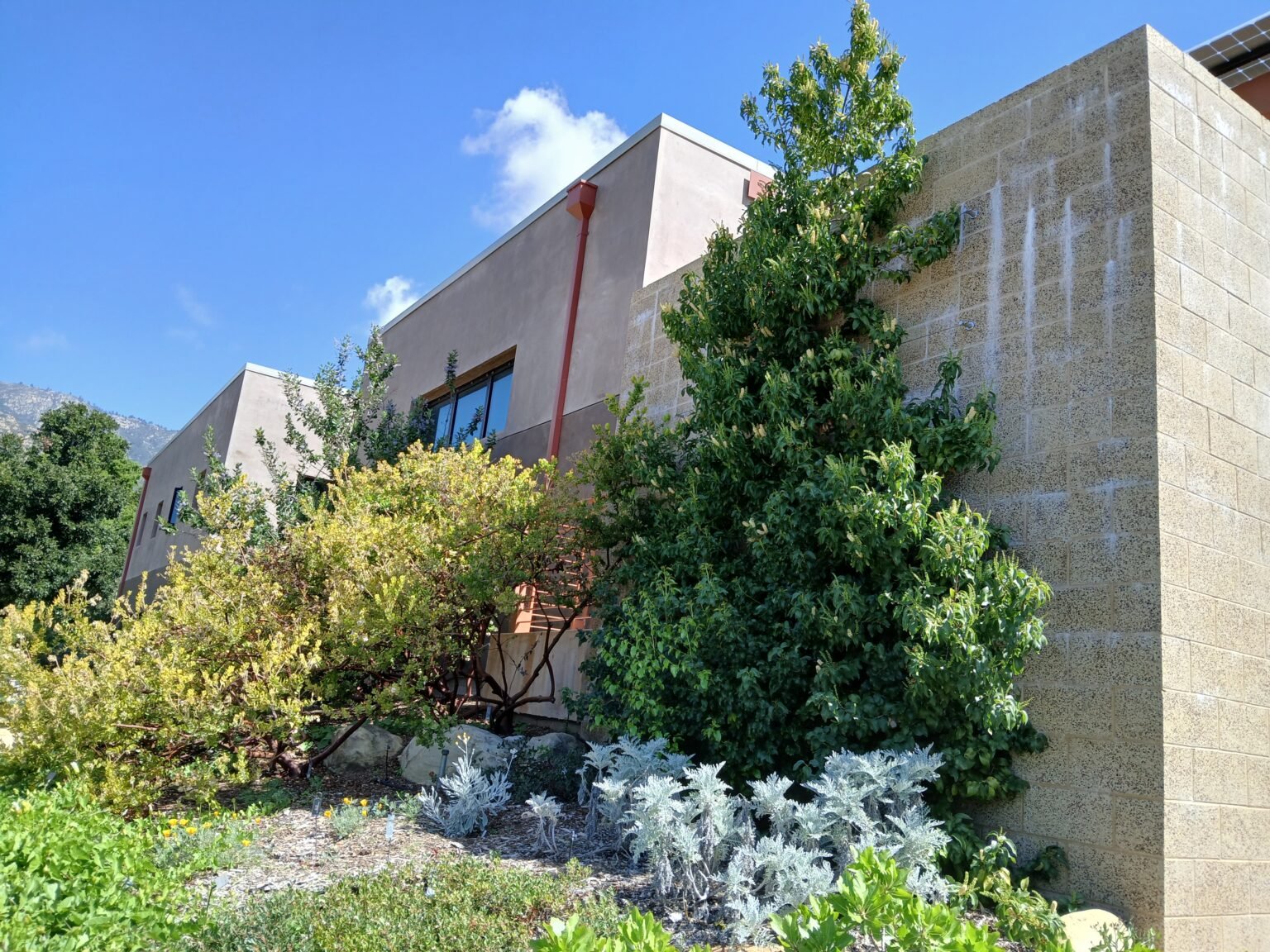
This is formidable defense. The chaparral plants are irrigated during their season of need and are allowed to grow and be. In this condition, these plants will withstand the lash of firebrands and intense heat. Between them and the fortified structure, this property has a great chance of surviving a firestorm. Picture taken at the Santa Barbara Botanic Garden.











Responses